 ultimate-guide
Best Time for Fishing Gulf Coast: 2026 Seasonal Guide
Table of Contents
- How Tides, Moon Phases, and Water Temperature Drive Gulf Coast Fishing
- Gulf Coast Fishing Seasons by Species: A Month-by-Month Breakdown
- Best Time of Day for Fishing the Gulf Coast: Dawn, Dusk, and Beyond
- Inshore vs. Offshore: How Location Changes Your Best Fishing Window
- Best Anna Maria Island Fishing Charters: What to Look For
- What to Bring on a Fishing Charter: A No-Surprises Checklist
- Fishing Regulations, Bag Limits, and Sustainable Catch-and-Release by Season
- Frequently Asked Questions
Last Updated: September 14, 2026
How Tides, Moon Phases, and Water Temperature Drive Gulf Coast Fishing
The best time for fishing gulf coast waters depends less on the calendar than on three drivers: tidal movement, moon phase, and water temperature. Align those three and a novice can out-fish an expert who showed up on the wrong day. Little Philly Sea Adventures plans charters around these factors.
Why Tidal Movements and Solunar Tables Matter More Than Luck
Moving water feeds fish. When tides push bait through passes, grass flats, and oyster bars, predators follow and catch rates climb. Slack tide is the opposite: fish scatter and bites go quiet.
A common mistake is booking around a convenient departure time instead of a tide window. The two hours around a tide change often outperform a full afternoon of static water. Solunar tables add a second layer: major and minor feeding periods fall around moonrise, moonset, and the moon's overhead and underfoot positions.
NOAA tide predictions for the Gulf of Mexico give you the exact windows for your dates, and they're free.
Water Temperature: The Invisible Switch for Bait Fish and Predators
Water temperature is the biggest trigger for fish behavior on the Gulf Coast. Bait fish move with temperature bands, and everything that eats them follows. When shallow flats warm into the upper 60s and low 70s Fahrenheit, inshore species turn on; when offshore water stabilizes in the mid-70s and above, pelagic action builds.
The trend matters as much as the number: a warming spell after a cold front beats a warm day that's already been warm for a week.
Gulf Coast Fishing Seasons by Species: A Month-by-Month Breakdown
Each season brings a different target list. Here's the quick-reference version.
| Season | Peak Months | Primary Species | Best Zone |
|---|---|---|---|
| Spring | March-May | Cobia, sheepshead, Spanish mackerel | Inshore, nearshore |
| Summer | June-August | Red snapper, gag grouper, king mackerel | Offshore |
| Fall | September-November | King mackerel, spotted seatrout, flounder | Inshore, nearshore |
| Winter | December-February | Sheepshead, grouper, black sea bass | Deep water, structure |
Spring (March-May): Cobia, Sheepshead, and the Inshore Awakening
Spring is when the Gulf shakes off winter. Cobia migrate along the coast, often hugging rays and buoys, while sheepshead stack around docks, pilings, and rock piles to spawn. Spotted seatrout move back onto shallow grass flats as water warms.
A common mistake in spring is fishing too deep, the fish are shallow, often in water you could wade. Sight-casting to cruising cobia is one of the year's most exciting inshore opportunities.
Summer (June-August): Red Snapper, Gag Grouper, and Offshore Limits
Summer belongs to offshore bottom fishing. Red snapper season draws the most attention, and gag grouper feed aggressively on deep structure. Early starts matter: by mid-morning, heat and boat traffic push fish down.
Federal red snapper seasons are set annually and change year to year, so check the NOAA Fisheries recreational season announcements before you book. Bag limits and size rules are enforced on the water.
Fall and Winter (September-February): King Mackerel, Spotted Seatrout, and Deep-Water Grouper
Fall is the sleeper season. King mackerel run hard along the beaches, spotted seatrout feed heavily before winter, and flounder stage near passes before heading offshore. In winter, sheepshead, grouper, and black sea bass remain catchable around deep structure.
Cold fronts define winter fishing. Fish the warming days between fronts, and expect the best action in the afternoon once the sun has lifted water temperatures a few degrees.
Best Time of Day for Fishing the Gulf Coast: Dawn, Dusk, and Beyond
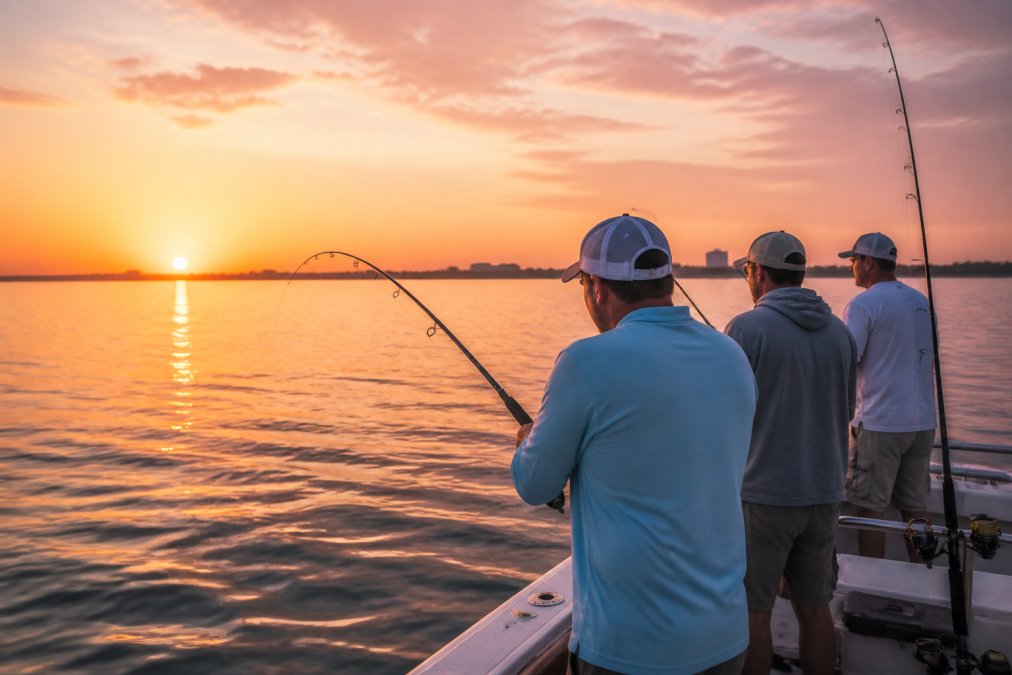
The best time for fishing gulf coast waters is the first two hours after sunrise and the last two before sunset, but that's only half the story. The bite window is a stack of three overlapping clocks: light level, tidal stage, and lunar phase. When all three line up, even a mediocre spot fishes well; when they conflict, the prettiest sunrise of the year can fish dead.
The Three Clocks That Set the Bite
Light clock. Low sun angles push predators shallow and make bait vulnerable, which is why dawn and dusk outperform midday almost everywhere on the Gulf. The effect is strongest on clear, calm mornings and weakest on overcast or choppy days, when fish stay shallow longer.
Tide clock. Moving water beats still water at any hour, a tide change at 10 a.m. out-fishes a slack high at sunrise. If you plan around one variable, pick the tide, then let light and moon phase refine the window.
Moon clock. Solunar theory holds that major feeding periods cluster around moonrise, moonset, and the moon's overhead and underfoot positions, with minor periods at the quarter points. The two or three days around a new or full moon produce the month's strongest tidal flow, more bait movement, more active predators. First and last quarter moons produce the weakest flow and most inconsistent bite.
Species-by-Species Feeding Windows
Different Gulf species key on different clocks, so 'dawn and dusk' is not a universal answer:
- Spotted seatrout, strongest at first light and again on the last hour of a moving tide; often feed through a bright midday if the water is moving.
- Redfish (red drum), tailing on flats is a dawn and dusk game, but slot fish also feed hard on the falling tide in the middle of the day around oyster bars and creek mouths.
- Snook, almost purely a low-light and nighttime fish; dawn, dusk, and the hour around a major solunar period are your windows.
- Cobia, mid-morning through afternoon on sunny spring days, when they cruise and sun themselves near the surface.
- King mackerel, early morning and late afternoon on the beach run, but a strong tide change can fire them up at any hour.
- Red snapper and gag grouper, offshore, the bite is often best in the first hour after you reach the bottom, then again on the tide change; midday heat and boat traffic push fish down and slow the chew.
Beginner vs. Advanced Timing Strategy
If you're new to Gulf fishing, don't optimize all three clocks. Pick a morning trip, ask your captain to leave so you're on the water for the tide change, and fish the two hours around it. That beats a full day of random timing.
If you're experienced, layer the clocks. Look for a day when a major solunar period, a tide change, and a dawn or dusk window fall within 90 minutes, rare, but those produce personal-best fish. A slack tide at noon during a first-quarter moon is a day to sleep in or run offshore, where depth buffers the tide effect.
When Midday Actually Works
Midday isn't dead. It fishes well when:
- The sky is overcast or there's a light chop breaking up the sun.
- A strong tide is running through a pass or inlet.
- A solunar major period lands at noon.
- You're fishing deep structure offshore, where light penetration matters less than current and bait presence.
Inshore vs. Offshore: How Location Changes Your Best Fishing Window
Most guides treat the Gulf as one body of water with one calendar. It isn't. The Gulf Coast spans roughly 1,600 miles of shoreline, and the best time in the Florida Panhandle isn't the best time in Louisiana's marsh or the Texas upper coast. Stop asking 'when is the best time on the Gulf' and start asking 'when is the best time in my sub-region.'
The Four Sub-Regions and How Their Seasons Shift
Florida Panhandle and Big Bend. Shallow, grass-heavy, and first to warm in spring. Cobia show up earliest here, often by late March, and the fall king mackerel run along the beaches is one of the Gulf's most reliable. Winter is toughest, cold fronts push fish deep and the flats go quiet for days.
West-Central Florida (Tampa Bay, Sarasota, Charlotte Harbor). Warmer and more stable than the Panhandle, with year-round inshore action. Spring and fall peak for spotted seatrout, redfish, and snook; summer is a dawn-and-dusk game; winter sheepshead fishing around docks and bridges is excellent when water drops into the 60s. Success in these varied conditions often hinges on selecting the right bait for bank fishing to entice species holding tight to structure.
Louisiana and Mississippi Delta. The marsh and river system creates some of the country's most productive inshore water, but it's the most turbid, sight-fishing is rare, so anglers key on current, structure, and scent. The spring redfish run and fall trout bite anchor the year. Freshwater inflow after heavy rain pushes salinity down and scatters fish, so timing around rainfall matters more here than anywhere else on the Gulf.
Texas Upper, Middle, and Lower Coast. Windier and shallower than Florida, so wind direction is often the deciding variable. Spring and fall are the prime inshore windows; summer is best at first light before the sea breeze builds; winter is a wade-fishing and deep-structure game. The lower coast stays warmer longer, extending the fall bite.
Inshore: What Actually Changes Your Window
Inshore fishing rewards tide, light, and water clarity. Because the water is shallow, wind direction and turbidity matter enormously: a hard east or northeast wind can dirty a flat and kill the bite for a full tide cycle, while a clean incoming tide can turn it back on within an hour. In the Louisiana marsh, salinity is the fourth variable, heavy upriver rain can drop it enough to move fish miles in a day.
Offshore: What Actually Changes Your Window
Offshore fishing rewards sea state, current, and barometric pressure. The marine forecast and current speed decide whether a trip is worth running. A falling barometer ahead of a front often triggers a fast bite; a flat, stable high slows things down. In the eastern Gulf, the Loop Current and its eddies push blue water closer to shore and can turn on pelagic action weeks earlier than the calendar suggests. The western Gulf season is shorter and more weather-dependent.
Skill-Level Guidance
Beginners should start inshore in a protected bay or harbor, in spring or fall, on a morning tide. Shorter runs, calmer water, and forgiving conditions mean you learn faster and get bit more often. West-central Florida and the Texas middle coast are the most beginner-friendly sub-regions, thanks to their accessible bay systems.
Intermediate anglers should add nearshore trips, king mackerel, Spanish mackerel, nearshore snapper, and start tracking barometric pressure and current alongside tides.
Advanced anglers chasing pelagics should plan around Loop Current edges in the eastern Gulf and temperature breaks and weed lines anywhere in the Gulf. On these trips, a one-day timing shift can mean the difference between a skunk and a box full of fish.
The Climate Shift Nobody Else Is Writing About
One angle most Gulf guides ignore: warming water is shifting migration and spawning windows. Long-time anglers report some spring arrivals, cobia in particular, showing up earlier than a generation ago, and fall runs extending later in the southern Gulf. The old calendars aren't wrong, just a starting point. The anglers who out-fish everyone else track actual water temperature and bait presence in their sub-region rather than trusting a static chart.
Best Anna Maria Island Fishing Charters: What to Look For
The best Anna Maria Island fishing charters share a few traits: a licensed captain with local water knowledge, a clear plan built around tides and season, and transparent pricing with no surprise add-ons. Ask what's included before you book, fuel, bait, tackle, licenses, and fish cleaning are the usual line items.
Little Philly Sea Adventures offers fishing charters with a no-surprises policy, so the number you're quoted is the number you pay. If you've never fished before, tell us when you book. We aim to match the trip to your experience level and help you have a successful outing.
What to Bring on a Fishing Charter: A No-Surprises Checklist
What to bring on a fishing charter comes down to sun protection, hydration, and a few personal items. Your captain supplies rods, reels, bait, and tackle; the rest is on you.
- Polarized sunglasses (cuts glare, helps you spot fish)
- Sunscreen, SPF 30 or higher, plus a hat and light long sleeves
- Plenty of water and easy snacks
- Non-marking soft-soled shoes
- A light rain shell, even on a clear forecast
- A cooler or bag for your catch if you plan to keep fish
- Motion sickness medication taken well before departure, not on the boat
- A valid fishing license if your charter doesn't include one
Bring layers in winter and spring. Gulf mornings can run cool, and afternoons warm up fast.
Fishing Regulations, Bag Limits, and Sustainable Catch-and-Release by Season
Fishing regulations, bag limits, and harvest seasons change by species, state, and whether you're in state or federal water. Red snapper seasons are set annually and can shift with stock assessments, so verify before every trip.
Catch-and-release practices vary by season. In summer heat, a released fish stresses faster, so keep handling short, wet your hands, and support the fish horizontally. In cooler months fish revive more easily, but barbless hooks and quick photos still help.
Check the Take Me Fishing licensing and regulations guide for state license requirements, and confirm federal rules for offshore species before you head out.
Frequently Asked Questions
What is the best month to go fishing on the Gulf Coast?
April through June delivers the most consistent action for inshore anglers, with spotted seatrout, redfish, and cobia active in warming shallows. For offshore trips, June and July align with red snapper season and calm seas. October is a sleeper month: water stays warm, crowds thin out, and king mackerel move closer to shore. Your ideal month depends on whether you want inshore variety or offshore size.
How do tide times affect fishing success in the Gulf?
Moving water concentrates bait fish and triggers feeding. The two hours around a rising or falling tide typically outperform slack tide by a wide margin. Inshore anglers target the last push of an incoming tide against oyster bars and mangroves. Offshore, tidal movement matters less than current speed and water clarity, but a strong tide still improves bottom fishing for grouper and snapper.
What should I know about seasonal fishing regulations before booking a charter?
Federal waters are managed by NOAA Fisheries, and seasons for red snapper, gag grouper, and amberjack shift annually. State waters may follow different dates and bag limits. Before you book, check the current NOAA Southeast Regional Office closures and confirm your captain holds the required federal reef fish permit. A licensed charter handles licensing for everyone aboard, but you are still responsible for knowing size and bag limits.
Is winter a good time for deep-sea fishing in the Gulf?
Yes, with the right expectations. Winter brings gag grouper and red grouper into shallower offshore depths, and amberjack remain active on wrecks and reefs. Seas can be rougher, so pick a captain who monitors the marine forecast and offers flexible rebooking. Milder winter days from December through February often produce quality bottom fishing with far fewer boats on the water.
What is the most effective bait for fishing in the Gulf Coast?
Live bait outperforms everything else when available. Pinfish, pilchards, and shrimp work inshore for redfish and trout. Offshore, live cigar minnows and threadfin herring draw king mackerel and snapper. Frozen squid and sardines are reliable backups. Many Anna Maria Island charters supply bait and tackle, so confirm what is included before you pack your own cooler.
What should I bring on a fishing charter?
Bring sunscreen, polarized sunglasses, a hat, non-marking soft-sole shoes, and layers for early mornings. Pack snacks and plenty of water, plus a small cooler for your catch if the captain does not provide one. Confirm whether your charter supplies rods, reels, bait, and fishing licenses. If you are prone to motion sickness, take medication well before boarding. Leave glass bottles and spray sunscreen at the dock.
Timing a Gulf Coast fishing trip around tides, moon phase, and water temperature takes local knowledge, and that's exactly what a good charter captain provides. Little Philly Sea Adventures builds every trip around those windows, supplies the gear and licenses, and keeps pricing transparent from the first quote to the final dock. Book your unforgettable experience today and let our Holmes Beach crew put you on the fish.