 listicle
Best Winter Jet Ski Tour Florida: 2026 Guide
Table of Contents
- Why Winter Is the Best Time for a Florida Jet Ski Tour
- Best Winter Jet Ski Tours in Florida: Our Top Picks
- What to Look For in the Best Jet Ski Rental Anna Maria Has to Offer
- What to Bring on a Jet Ski Tour in Cooler Weather
- Jet Ski Tour Duration and Pricing: What to Expect
- Safety and Regulations for Winter Riders
- Choosing the Right Florida Region for Your Winter Ride
- Book Your Winter Jet Ski Adventure
- Frequently Asked Questions
Last Updated: September 7, 2026
Why Winter Is the Best Time for a Florida Jet Ski Tour
A winter jet ski tour in Florida offers calm Gulf waters, comfortable air temperatures, and far thinner crowds than the summer peak. While many visitors assume the season ends in November, locals know the dry season delivers some of the most favorable riding conditions, with Gulf Coast water temperatures often in the mid-60s to low-70s and humidity dropping to a manageable range. This guide covers top tour picks, gear, safety, and regional differences so you ride prepared rather than surprised.
Most first-time winter riders make one mistake: they dress for the air temperature, not the water. A 70-degree day feels pleasant on land, but on a personal watercraft (PWC) at speed, the wind chill cuts straight through a cotton hoodie. Below, we cover what to wear, what to expect from a guided tour, and how to choose between riding regions.
Best Winter Jet Ski Tours in Florida: Our Top Picks
Quick Picks:
- Best Overall: Little Philly Sea Adventures, transparent booking and Gulf Coast expertise on Anna Maria Island and Holmes Beach
- Best for Sightseers: Key West Original Island Jet Ski Tour, a 90-minute guided excursion covering 28 miles of coastline
- Best for Eco-Focused Riders: Panama City Beach Jet Ski Eco Tour, a 22-mile route built around wildlife observation
A winter jet ski tour is only as good as the operator behind it. Our top pick is Little Philly Sea Adventures, a local provider serving Holmes Beach and Anna Maria Island with a focus on premium Gulf Coast experiences and a "no surprises" policy. This commitment ensures a transparent and seamless booking process for all guests.
For riders based further south, the Key West Original Island Jet Ski Tour offers a 90-minute guided adventure that covers 28 miles of coastline, ideal for sightseers who want a comprehensive sweep of the Keys. Nature-focused travelers should consider the Panama City Beach Jet Ski Eco Tour, which pairs a 22-mile round trip with dolphin spotting and coastal exploration. Budget-conscious groups often compare options through Tripadvisor's Florida jet ski directory, where verified user reviews help confirm an operator's reputation before you commit.
What to Look For in the Best Jet Ski Rental Anna Maria Has to Offer
Choosing the best jet ski rental Anna Maria Island has available comes down to three factors that matter more than flashy equipment: transparent pricing, operator responsiveness, and route access. The Gulf Coast's shallow water access around Anna Maria and Holmes Beach means tours can weave through mangrove tunnels and along sandbars that deeper-draft vessels cannot reach, so a local guide who knows the tidal conditions is worth real money.
Ask any prospective operator these questions before booking:
- Is the quoted rate all-inclusive, or are fuel, taxes, and fees added later?
- What happens if the watercraft sustains damage during the rental window?
- Do you provide a safety briefing and life jackets before departure?
- What is the cancellation policy if a winter cold front rolls through?
The "no surprises" approach at Little Philly Sea Adventures directly addresses the first two questions, which are the source of most post-rental disputes. A reputable operator should answer all four without hesitation; if you get vague responses, ride elsewhere.
What to Bring on a Jet Ski Tour in Cooler Weather
Most guides treat a winter ride like a summer ride with a light jacket. That is a mistake. On a 70-degree day, riding at 35 mph creates a wind chill closer to 50 degrees. Add spray from the Gulf, and your core temperature drops fast.
The first rule is to know the water temperature, not just the air temperature. Along the Gulf Coast in January, water temperatures typically range from the mid-60s to low-70s; in the Panhandle, they can dip into the 50s. For water below 70 degrees, a wetsuit is not optional, it is the difference between shivering through the second half of the tour and enjoying the ride.
Here is what experienced winter riders bring:
- A 3/2mm wetsuit top or full suit. A 3/2mm suit (3mm in the core, 2mm in the limbs) is the standard choice for Florida winter water. It insulates when wet and blocks wind. If you do not own one, ask your tour operator whether they provide wetsuit rentals, many Gulf Coast operators stock them specifically for the November-through-March season.
- Waterproof outer shell. Over the wetsuit, a thin waterproof shell or splash jacket cuts the wind and keeps spray off your core. Look for something with sealed seams and a high collar.
- Neoprene booties or water shoes. Your feet take the most spray on a PWC. Neoprene booties add insulation and grip on wet footwells. Standard sneakers will stay wet for the entire tour and chill your legs.
- Gloves. Thin neoprene gloves or even cheap knit gloves under waterproof shells protect your hands from wind and spray. Cold hands make throttle control sloppy, which matters when you are navigating channels.
- Polarized sunglasses. Winter sun sits lower in the sky, creating intense glare off the water. Polarized lenses cut that glare and help you spot sandbars and navigation markers.
- Sunscreen. Winter sun still burns, especially with reflective glare off the Gulf. Apply SPF 30 or higher to exposed skin, your face, neck, and hands, before the tour.
- A dry bag with a change of clothes. After the tour, you will be damp and chilled. A dry bag with a fleece layer, a towel, and a warm hat makes the ride back to your car comfortable instead of miserable.
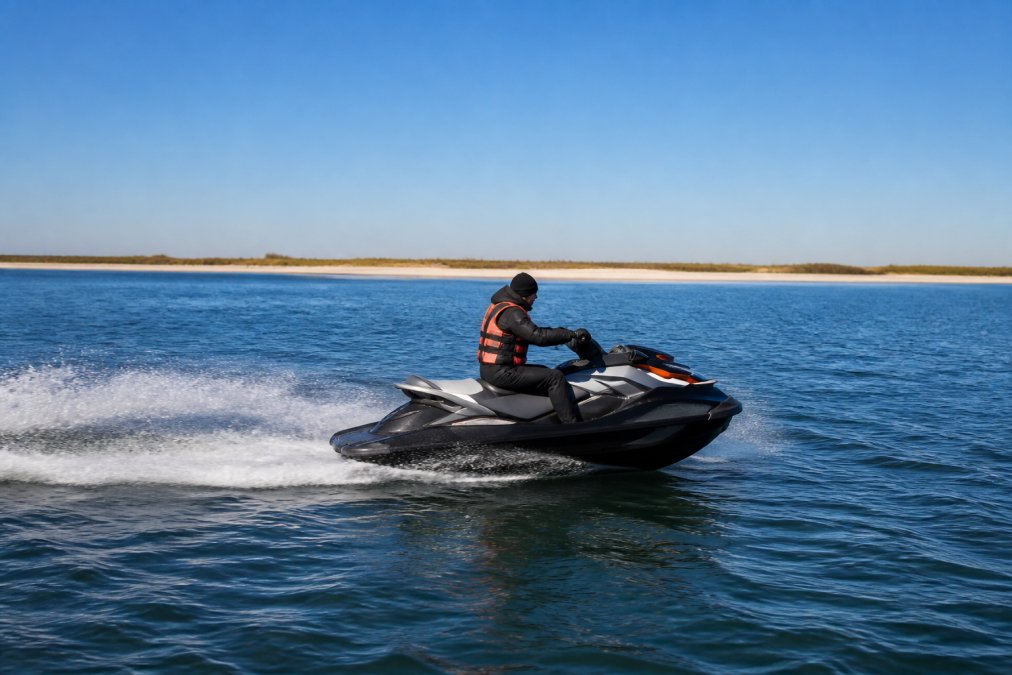
A final note on cotton: leave it at home. A cotton hoodie absorbs spray, holds water against your skin, and accelerates heat loss. Synthetic base layers, wool, or neoprene are the only materials that keep you warm when wet.
Jet Ski Tour Duration and Pricing: What to Expect
Most guided jet ski tours in Florida run between 60 and 90 minutes, which balances ride time with sightseeing stops and safety briefings. The rental duration directly affects price, with hourly rates and per-tour packages being the two common models. On the Gulf Coast, expect a typical tour to cover 15 to 28 miles depending on the route and the operator's focus on wildlife viewing versus open-water speed.
| Tour Type | Typical Duration | Route Coverage | Best For |
|---|---|---|---|
| Guided sightseeing tour | 90 minutes | 22-28 miles | First-time visitors, scenic routes |
| Eco-focused tour | 60-90 minutes | 15-22 miles | Wildlife spotting, mangrove tunnels |
| Independent rental | Hourly | Varies by rider | Experienced riders, local explorers |
Pricing varies by operator, location, and season, so the most reliable approach is to request a quote directly from the provider. Little Philly Sea Adventures's no-surprises policy means the quoted figure reflects the final total. Pricing varies by operator, location, and season, so the most reliable approach is to request a quote directly from the provider. Winter is generally a value season on the Gulf Coast, with fewer crowds and more flexible scheduling than the summer peak.
Safety and Regulations for Winter Riders
Florida law requires all PWC operators born on or after January 1, 1988, to complete a boating safety course and carry proof of completion, though guided tours typically handle this verification through the operator's safety briefing. A boating license is not required for a guided excursion, but knowing the rules before you ride keeps everyone safer.
A proper safety briefing covers throttle control, coastal navigation, and how to respond to ocean conditions. Winter riding adds two specific considerations: colder water means hypothermia risk increases if you fall in, and winter cold fronts can shift weather forecasts quickly. Check the marine forecast the morning of your ride, and trust your operator's judgment if they reschedule due to wind or sea state. Life jackets are non-negotiable and should be worn at all times, not stowed under the seat.
Book your unforgettable experience today! →
Choosing the Right Florida Region for Your Winter Ride
Florida's coastline spans more than 1,300 miles, and in winter, the difference between riding in the Panhandle and the Keys is not just scenery, it is a completely different climate. Choosing the wrong region can mean booking a tour canceled by a cold front or showing up in a t-shirt when you need a wetsuit. Here is how the regions break down.
South Florida and the Gulf Coast: The Warm-Water Choice
The Gulf Coast from Tampa Bay south through Naples, along with the Florida Keys and Biscayne Bay, offers the warmest winter water in the continental United States. Shallow Gulf waters retain heat well into January, with surface temperatures typically in the mid-60s to low-70s. Daytime air temperatures commonly reach the 70s, making a winter tour comfortable with just a wetsuit top and a shell.
The trade-off is that this region is also the most popular winter destination. Expect more boat traffic in the Keys and around Marco Island, and book tours in advance during holiday weeks. The Gulf Coast around Anna Maria Island and Holmes Beach offers a quieter alternative, the same warm water with fewer crowds.
The Panhandle: Cooler Water, Fewer Riders
The Panhandle, including Panama City Beach and Destin, runs noticeably cooler in winter. Water temperatures drop into the 50s and low 60s, and air temperatures frequently sit in the 50s and 60s. This is not a dealbreaker, it just changes the gear requirements. A full 4/3mm wetsuit, booties, and gloves become necessary. Many Panhandle operators run limited tours or close entirely between December and February, so call ahead to confirm availability.
The advantage of the Panhandle is solitude. On a clear winter day, you can have miles of Gulf water to yourself, and dolphin sightings are common. The eco-tours around Panama City Beach that operate in winter tend to be smaller groups with more personalized attention.
East Coast: The Wildcard
The Atlantic coast from Jacksonville down to Miami is the least predictable winter option. The Atlantic tends to run a few degrees cooler than the Gulf at the same latitude, and winter cold fronts bring wind and choppy seas that can cancel tours at short notice. The Intracoastal Waterway offers protected riding, but open-water tours along the Atlantic beaches are more likely to be rescheduled than their Gulf counterparts.
How to Decide
For a first-time winter rider or a visitor from out of state, the Gulf Coast between Sarasota and Naples is the most reliable choice. It offers the warmest water, the most consistent winter weather, and the widest selection of year-round tour operators. The Keys are a strong alternative if you want island-hopping scenery and are comfortable with more boat traffic. The Panhandle is best for experienced riders who own proper cold-water gear and want solitude over convenience.
For out-of-state visitors, logistics matter as much as climate. If you are flying into Florida, you cannot easily pack a wetsuit and booties in a carry-on, so confirm that your operator provides or rents cold-water gear. If you are driving, remember that a wetsuit takes up space and dries slowly.
The bottom line: winter riding in Florida ranges from a warm, sunny cruise through the mangroves near Anna Maria Island to a brisk ride along the Panhandle's empty beaches. Match the region to your tolerance for cold and your gear, and you will find a winter tour that delivers exactly what you came for.
Book Your Winter Jet Ski Adventure
A winter jet ski tour Florida delivers what summer crowds cannot: calm water, clear skies, and the Gulf Coast's wildlife in active winter mode. The key is preparation, from layering the right gear to choosing an operator that answers your pricing and safety questions with clarity.
Little Philly Sea Adventures pairs premium Gulf Coast adventures with a transparent booking process, so your group can focus on the ride rather than hidden fees. With tours departing from Holmes Beach and Anna Maria Island, the local team provides the equipment and expertise to make your winter trip effortless. Book your unforgettable experience today and see why winter is the smart season to ride.
Frequently Asked Questions
Is winter a good time for jet skiing on the Gulf Coast?
Yes, winter often offers the best conditions for a Florida jet ski tour. The dry season brings clearer skies and calmer waters, and the air temperature is cooler than the summer months. While the water temperature drops, it remains rideable, especially with the right gear. For many visitors escaping colder climates, the 60-70 degree days feel perfect for an on-water adventure. You will also find fewer crowds at popular spots, which means a more peaceful ride.
What should I wear for a winter jet ski tour?
Layering is key for a winter jet ski tour. Start with a moisture-wicking base layer to keep sweat off your skin. Add a fleece or light insulated layer for warmth. The outer layer should be a waterproof and windproof jacket. Your operator will provide a life jacket, which also adds insulation. Consider bringing a neck gaiter and thin gloves. Waterproof pants or a wetsuit bottom are wise, as you will still get splashed.
Do I need a boating license to rent a jet ski in this region?
Florida law requires anyone born on or after January 1, 1988, to complete a boater safety course and carry a Boating Safety Education ID Card to operate a personal watercraft. If you are visiting from out of state, you can take the approved online course before you travel. A reputable tour operator will confirm your credentials during booking and provide a thorough safety briefing before you head out.
What wildlife can I see on a winter jet ski tour?
Winter is prime time for wildlife viewing, especially for manatees. These gentle giants seek out warmer waters during the cooler months, making sightings more common. You may also see dolphins playing in the wake, and a variety of migratory birds along the coast. The clearer winter water often improves visibility. Always keep a respectful distance from all marine life and follow your guide's instructions to avoid disturbing them.