 listicle
Book a Private Fishing Charter in 2026: 7 Steps
Table of Contents
- Best Anna Maria Island Fishing Charters for 2026
- Private Fishing Charter Cost Breakdown
- Half Day vs Full Day Fishing Charter: Which One Fits Your Trip?
- What to Bring on a Fishing Charter: Your 2026 Checklist
- How to Book a Private Fishing Charter in 2026: Step-by-Step
- Tipping Etiquette and Hidden Fees to Watch For
- Sustainable Fishing Practices on Your Charter
- Conclusion: Book Your Unforgettable Experience Today
- Frequently Asked Questions
Last Updated: September 12, 2026
Best Anna Maria Island Fishing Charters for 2026
Booking a private fishing charter in 2026 starts with choosing the right operator, and on the Gulf Coast that comes down to transparency, local knowledge, and how the crew treats first-timers. Little Philly Sea Adventures built its program around a "no surprises" policy: the rate you agree to is the rate you pay, with no fuel surcharges at the dock. For families in Holmes Beach and Anna Maria Island, that clarity matters as much as the catch.
A private fishing charter is a boat reserved exclusively for your group, with a licensed captain handling navigation, bait, and gear. Inshore trips work the bays and passes for snook, redfish, and trout, while offshore runs head into deeper Gulf water for grouper and snapper. The Florida Fish and Wildlife Conservation Commission recreational regulations set bag limits and seasons for every species you'll target, and a good captain tracks those rules so you don't have to.
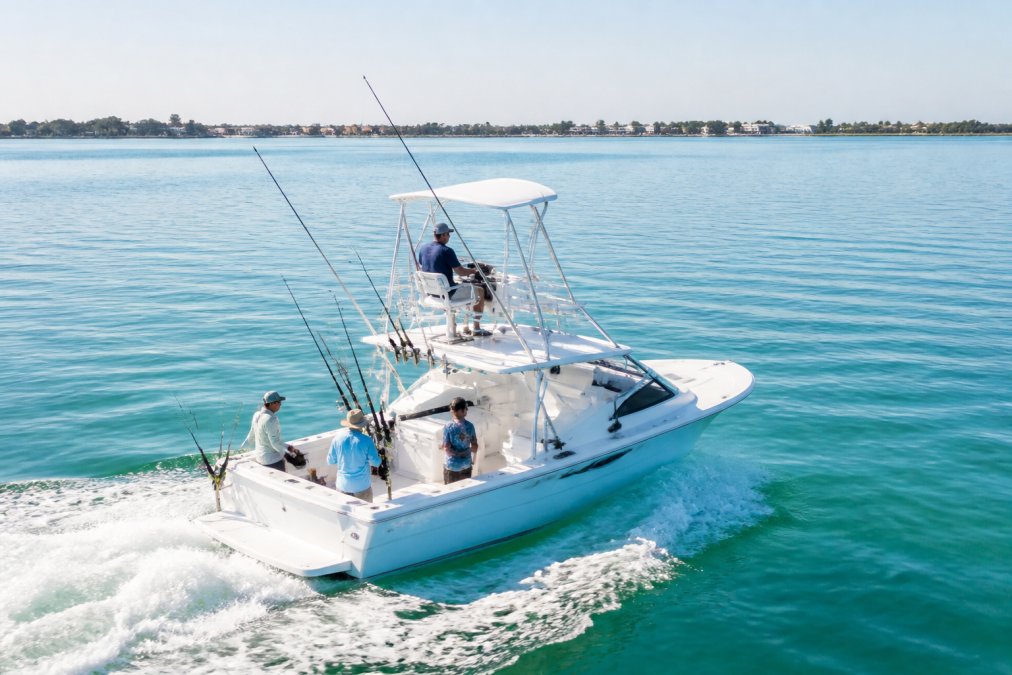
What separates a strong operator from a mediocre one? Vessel capacity that matches your group, captain-maintained tackle, and a clear weather policy in writing.
| Trip Type | Typical Duration | Best For | Group Size |
|---|---|---|---|
| Inshore half day | 4 hours | Families, beginners, kids | 2-6 |
| Offshore half day | 4-5 hours | Mixed experience groups | 4-8 |
| Full day inshore | 8 hours | Serious anglers, species targeting | 2-4 |
| Full day offshore | 8-10 hours | Deep sea fishing, trophy catches | 4-8 |
Private Fishing Charter Cost Breakdown
Private fishing charter pricing depends on trip duration, distance from dock, group size, and whether the boat is all-inclusive. Most operators quote a flat vessel rate rather than per person, so splitting the cost across your group lowers the per-head figure considerably.
Here's what actually drives the total:
- Trip duration: A full day costs more than a half day, but not double, since fuel and dock time don't scale linearly.
- Distance offshore: Deep sea fishing burns more fuel than inshore bay trips.
- Group size: Larger groups need bigger vessels, which carry higher base rates.
- Add-ons: Bait, tackle, ice, and licenses are sometimes bundled and sometimes billed separately.
- Gratuity: Customarily 15-20% of the trip total for the deckhand or mate.
Private vs. Shared: The Cost-Benefit Math
A shared (party) boat looks cheaper per person, but that only holds for a single angler. Run the numbers on a group of four to six and the gap narrows fast.
On a shared boat you pay per head, fish the boat's schedule and spots, and share rail space with strangers. On a private charter the flat vessel rate divides across your group and you control the itinerary. Once a group reaches four or more, the per-person cost of a private charter often lands close to a shared trip, while adding customization, privacy, and catch control a party boat can't offer.
What you're actually buying with the private premium:
- Customization: You pick the target species, the departure time, and whether to stay inshore or run offshore.
- Privacy: No strangers on deck, which matters for families, client outings, and groups with kids.
- Catch control: The captain can move to a new spot the moment the bite dies instead of waiting on a fixed party-boat schedule.
- Gear fit: Rods and tackle are matched to your group's experience level, not a one-size-fits-all setup.
Hidden Fees and Tipping: What the Total Really Includes
Gratuity is the line item first-timers forget most. Plan on 15-20% of the trip total, handed to the mate or deckhand who baited hooks, netted fish, and cleaned your catch. On private charters the captain often splits tips with the crew, so one tip at the end is standard.
The bigger risk is fees that appear after the trip:
- Fuel surcharges added at the dock
- Bait and tackle billed separately from the quoted rate
- Cleaning or filleting fees for your catch
- License fees if the boat doesn't carry a blanket permit
- Damage deposits that aren't clearly refundable
The Federal Trade Commission guidance on advertising and pricing claims requires businesses to disclose mandatory fees upfront, so a reputable operator should never surprise you at the dock. If a quote feels vague, ask directly what the final total will be, in writing.
Because rates vary by season and vessel, request a written quote listing every line item. Little Philly Sea Adventures publishes its terms upfront so you can see the full total before committing. For current rates, check the operator's booking page directly rather than third-party listings, which often lag behind actual pricing.
Half Day vs Full Day Fishing Charter: Which One Fits Your Trip?
A half day charter suits beginners, families with young kids, and tight vacation schedules. A full day trip is worth the extra cost when chasing specific offshore species or reaching productive grounds.
Half day trips run 4 to 5 hours and stay closer to shore, plenty of time to learn the basics, land a few fish, and get back for an afternoon on the beach. For children or first-timers, it's the safer bet: attention spans fade, and a shorter trip ends on a high note instead of a tired one.
Full day trips run 8 to 10 hours and open up deeper water and more species. The trade-off is commitment: you're on the boat most of the day, and weather can shift. For experienced anglers targeting grouper and snapper in deeper Gulf water, the extra hours are the whole point.
Seasonal availability shapes this choice too: winter brings different inshore species than summer, and offshore conditions vary by month. Ask your captain what's biting during your travel dates before deciding on duration.
What to Bring on a Fishing Charter: Your 2026 Checklist
What to bring on a fishing charter comes down to sun protection, layers, and a few personal items the boat won't supply. Most operators provide rods, reels, bait, and tackle, confirm before you pack.
- Sunscreen (reef-safe, applied before boarding)
- Polarized sunglasses and a hat with a brim
- Light long-sleeve shirt and a rain layer
- Non-marking soft-soled shoes
- Reusable water bottle and snacks
- Motion sickness medication taken 30-60 minutes before departure
- A small cooler for your catch, if the boat doesn't supply one
- Your fishing license, if the operator doesn't cover it
Leave hard-sided coolers and glass containers at the rental, deck space is limited and glass is a hazard on a moving vessel. Bring a soft bag instead.
How to Book a Private Fishing Charter in 2026: Step-by-Step
Booking a private fishing charter in 2026 is a five-step process: pick your date, confirm group size, choose trip duration, verify what's included, and lock it in with a deposit. Doing these in order prevents the last-minute scramble that leads to overpaying or settling for the wrong boat.
Step 1: Set your date and check seasonal availability. Species and weather shift by month, so match your target fish to your travel window.
Step 2: Confirm your group size. Vessel capacity is a hard limit, and coast guard regulations cap passengers per boat. Eight people usually requires a larger vessel, so flag that early.
Book your unforgettable experience today! →
Step 3: Choose half day or full day. Beginners and families lean half day; serious anglers go full day.
Step 4: Get the full cost in writing. Ask for a line-item quote covering the base rate, fuel, bait, tackle, licenses, and taxes.
Step 5: Book and confirm the weather policy. Understand the cancellation terms before you pay, and get the dock departure time and address in writing.
| Step | Action | What to Confirm |
|---|---|---|
| 1 | Pick your date | Seasonal species availability |
| 2 | Confirm group size | Vessel capacity limits |
| 3 | Choose duration | Half day vs full day fit |
| 4 | Request written quote | All fees itemized |
| 5 | Pay deposit | Weather and cancellation policy |
The 2026 Advance-Planning Checklist
Most booking advice stops at "call the captain." For a 2026 trip, the calendar is the variable you control, and the one that moves price most. Work through this checklist before you commit:
- Book 6-12 months out for peak season. Spring break, summer weekends, and holiday weeks fill first. The earliest bookers get the best boats and the widest date selection.
- Avoid peak-season price hikes by shifting a week. Rates often step up during the busiest travel windows. A shoulder-season date a week on either side can land a lower rate for the same trip.
- Lock your date before you book flights or lodging. A charter is the least flexible piece of a fishing vacation. Confirm the boat first, then build the trip around it.
- Ask about the 2026 season's species windows. Bag limits and seasons are set annually, so confirm what's open during your dates rather than assuming last year's rules carry over.
- Get the weather policy in writing before the deposit. Understand how a weather cancellation is handled and whether you can rebook.
- Reconfirm 48-72 hours out. Departure times and dock addresses occasionally shift. A quick confirmation call prevents a wasted morning.
Online booking is faster, but a phone call to the captain still pays off: you learn what's actually biting and whether your group fits the boat.
Tipping Etiquette and Hidden Fees to Watch For
Tipping etiquette on a fishing charter follows a simple norm: 15-20% of the trip total, handed to the mate or deckhand who baited hooks, netted fish, and cleaned your catch. On private charters the captain often splits tips with the crew, so one tip at the end is standard.
Hidden fees are the bigger risk. Watch for these:
- Fuel surcharges added after the trip
- Bait and tackle billed separately from the quoted rate
- Cleaning fees for filleting your catch
- License fees if the boat doesn't carry a blanket permit
- Damage deposits that aren't clearly refundable
The Federal Trade Commission guidance on advertising and pricing claims requires businesses to disclose mandatory fees upfront, so a reputable operator should never surprise you at the dock. If a quote feels vague, ask directly what the final total will be.
Sustainable Fishing Practices on Your Charter
Sustainable fishing practices keep Gulf Coast fisheries healthy for the next generation, and charter captains are often the first line of defense. Catch and release, respecting size and bag limits, and proper handling all matter.
The National Oceanic and Atmospheric Administration fisheries management resources oversees federal regulations for species like grouper and snapper, while state rules govern inshore waters. A licensed captain knows which limits apply and will keep your trip compliant.
What responsible practices look like on the water:
- Releasing undersized or out-of-season fish quickly and gently
- Using circle hooks to reduce injury to released fish
- Keeping only what you'll eat
- Following seasonal closures without exception
Catch and release isn't just ethical; it's often a legal requirement for protected species. Ask your captain how the boat handles releases and what gear they use.
Conclusion: Book Your Unforgettable Experience Today
Planning a charter in 2026 means more than picking a date: confirm what's included, understand the total cost upfront, and choose an operator who respects your time and the fishery. The gap between a great trip and a frustrating one usually comes down to transparency.
Little Philly Sea Adventures built its business around exactly that. The no surprises policy means your quoted rate covers what it says it covers, booking is straightforward, and the crew serves Holmes Beach and Anna Maria Island with local knowledge you can't get from a generic listing. Whether you're a first-timer bringing the kids or friends chasing offshore species, the goal is the same: a day on the water you'll want to repeat.
Get started with Little Philly Sea Adventures and book your unforgettable experience today.
Frequently Asked Questions
How much does a private fishing charter cost?
A private fishing charter cost breakdown includes the base boat rate, fuel, crew gratuity, and any add-ons like bait or gear. Prices vary by trip length, vessel size, and season, so request a written quote that lists every line item. Little Philly Sea Adventures follows a no surprises policy, meaning you see the full total before you commit. For current rates, contact the operator directly.
How much do you tip for a 4-hour fishing charter?
A standard tip for a 4-hour fishing charter is 15-20% of the trip cost, handed directly to the captain or split with the mate. If the crew worked hard to put you on fish, cleaned your catch, or helped beginners, lean toward the higher end. Bring cash; many charter boats cannot add gratuity to a card after the trip. Tipping is not mandatory but is customary in the industry.
What should I look for when booking a private fishing charter?
Check that the captain holds a current US Coast Guard license, the vessel carries safety equipment, and the operator provides a written confirmation with all fees. Look for recent verified reviews, not just a high count. Ask about the weather policy, cancellation terms, and whether bait, tackle, and fishing licenses are included. A transparent operator will answer these questions before you pay a deposit.
Are fishing licenses included in private charter bookings?
In Florida, a charter boat that holds a valid federal or state permit typically covers your fishing license while you are on board. Confirm this before booking, because rules vary by vessel and trip type. If the license is not included, you can buy a temporary Florida fishing license online in minutes. Ask the captain whether your trip stays in state waters or heads offshore, as that affects which license applies.
What is included in a private fishing charter package?
Most private fishing charter packages include the boat, captain, crew, bait, tackle, ice, and safety gear. Some operators add bottled water, snacks, or fish cleaning. What is often not included: fuel surcharges, gratuity, parking, and personal items like sunscreen or motion sickness medication. Always read the inclusions list and ask about anything unclear before you book, so there are no surprises on the dock.