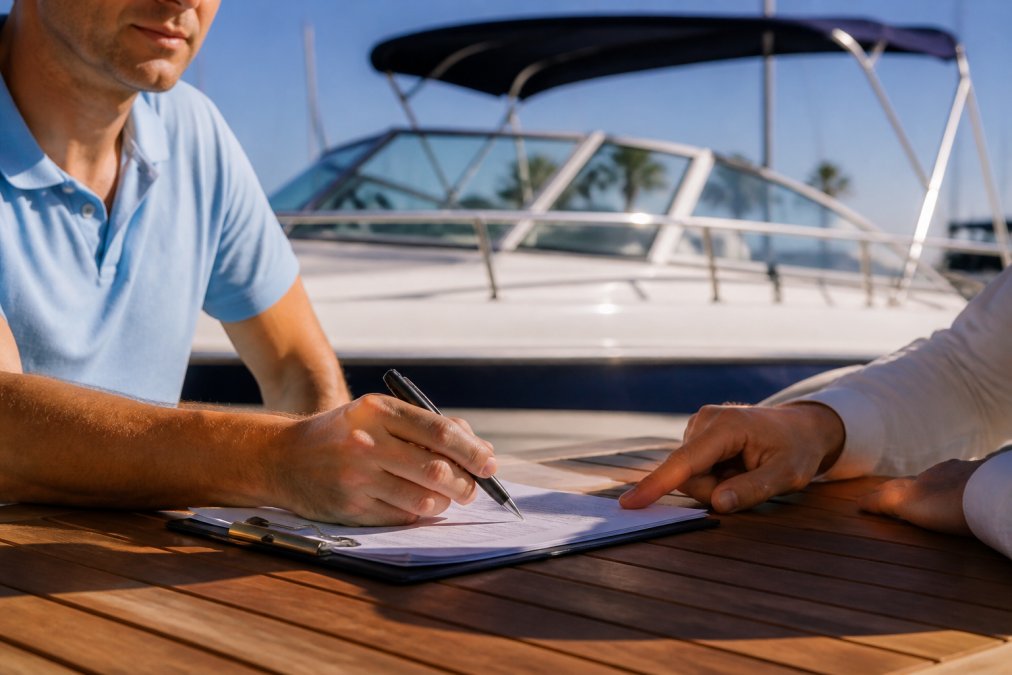
 ultimate-guide
Is Boat Rental Insurance Mandatory in Florida? 2026 Guide
Table of Contents
- Is Boat Rental Insurance Mandatory in Florida? The Legal Reality
- Understanding the Florida Boating Safety Act (SB 606)
- Liability Coverage Requirements for Boat Liveries
- What Does Boat Rental Insurance Cover? Coverage Breakdown
- Boating Safety Education Requirements: Who Needs a License
- How to Avoid Hidden Boat Rental Fees: A Transparent Checklist
- Credit Card Coverage Limits and Why Supplemental Protection Matters
- Peer-to-Peer vs. Traditional Livery Insurance: Key Differences
- Frequently Asked Questions
Last Updated: September 11, 2026
Is Boat Rental Insurance Mandatory in Florida? The Legal Reality
No, Florida law does not require renters to carry their own boat rental insurance. The state does not mandate that you purchase a policy before operating a rental vessel. What Florida does require is that commercial liveries carry liability coverage, and most rental agreements pass significant financial responsibility back to you.
This is the gap most renters discover too late. The law protects the livery operator's obligations, not your wallet. We built our booking process around closing that gap with clear, upfront terms.
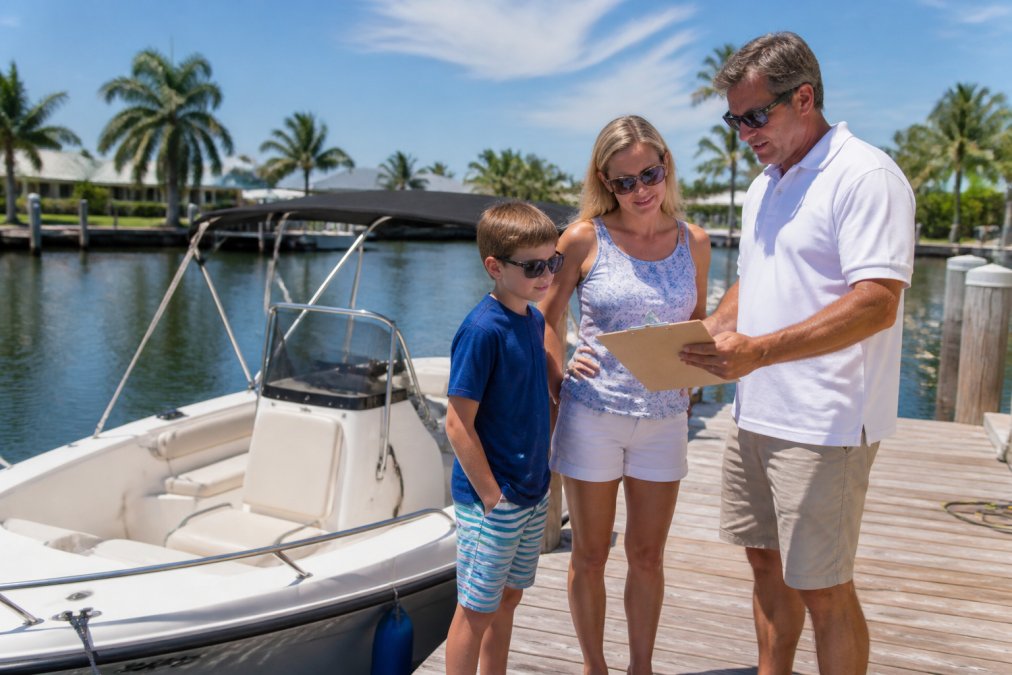
What Florida Law Actually Requires for Rental Vessels
Florida statutes require commercial boat liveries to maintain liability insurance, but they do not require individual renters to hold a policy. The distinction matters: the livery must be insured to operate legally, while you are responsible for damage you cause.
A common mistake is assuming the livery's policy covers you completely. In practice, it covers the operator's liability exposure. Your personal financial responsibility for hull damage, lost equipment, or injuries you cause to others typically remains.
Understanding the Florida Boating Safety Act (SB 606)
SB 606 is the livery-focused boating safety package that tightened how rental operators in the state screen, brief, and insure their customers. The headline change for renters is not a new insurance mandate, it is a new education and documentation mandate that runs through the livery operator, not through you.
In practice, SB 606 did three things that affect a rental transaction:
- It pushed livery operators to verify that renters meet the state's boating safety education requirement before a vessel leaves the dock.
- It required pre-rental safety briefings covering navigation rules, right-of-way, and emergency procedures.
- It reinforced the operator's obligation to carry commercial liability coverage, which is separate from anything you might buy as a renter.
How SB 606 Affects Boat Livery Operators and Renters
The education requirement is the part renters trip over. The state requires operators born on or after January 1, 1988 to hold a Florida Boating Safety Education ID card (or an approved equivalent) to operate a vessel powered by 10 horsepower or more. That rule predates SB 606, but SB 606 tightened how liveries enforce it at the point of rental.
For renters, the practical flow looks like this:
- You disclose your birth date during booking or at check-in.
- The livery checks whether you fall under the education requirement. If you were born before January 1, 1988, you are generally exempt.
- If you are covered by the rule, you either present a valid Boating Safety Education ID card or complete the livery's approved pre-rental briefing, which many operators can use to issue a temporary certificate.
- The livery documents the briefing and keeps a record, because the operator, not you, carries the compliance exposure if the check is skipped.
That last point is the one renters miss. If a livery hands you the keys without verifying education, the operator is the one exposed to enforcement. Your exposure is different: you can still be cited for operating without the required education, and a citation can complicate an insurance claim after an incident.
How the Education ID Card Interacts With Insurance and Rental Eligibility
This is the angle most guides skip. Holding a Florida Boating Safety Education ID card does not change whether you are legally required to carry boat rental insurance, you still are not. What it changes is how insurers and liveries evaluate you.
- Rental eligibility: Some liveries will not release a vessel above a certain horsepower to a renter who cannot show education compliance, even if a temporary certificate is technically available. The card removes that friction.
- Claims handling: After an incident, an insurer reviewing a claim will look at whether the operator was legally qualified to be at the helm. Operating without the required education gives a carrier a basis to dispute coverage or deny a claim.
- Supplemental policy underwriting: Short-term rental policies and damage waivers often ask about operator experience and certification. A current education card is a straightforward way to answer those questions.
A common mistake is treating the education card as a substitute for insurance. It is not. The card proves you met a competency requirement; it does nothing to transfer financial responsibility for hull damage, injuries you cause, or third-party property damage. Those remain your exposure unless you buy supplemental protection or the livery's agreement explicitly absorbs them.
Florida Fish and Wildlife Conservation Commission boating safety education requirements
Liability Coverage Requirements for Boat Liveries
State law requires commercial boat liveries to carry liability coverage as a condition of operating. The specific minimums are set in statute and enforced through the livery's registration and inspection process, not through the renter. That distinction is the whole game: the livery must be insured to operate legally, but the livery's policy is written to protect the operator and third parties, not to indemnify you for damage you cause to the rented vessel.
Per Occurrence vs. Per Person Limits Explained
Liability policies are written with two caps that work together:
- Per occurrence limit, the maximum the policy will pay for a single accident, no matter how many people are injured or how much property is damaged.
- Per person limit, the maximum any one injured person can collect from that occurrence.
A policy might read $500,000 per occurrence and $100,000 per person. If three people are injured in one accident, the total payout is capped at $500,000, and no single claimant can receive more than $100,000, even if their medical bills exceed that figure. The injured party pursues the difference from the responsible operator or renter personally.
This is why the livery's coverage number matters less than renters assume. A $500,000 per-occurrence limit sounds large until you price out a serious injury claim, a sunk vessel, and a fuel or environmental cleanup. The livery's policy is a floor, not a ceiling on your exposure.
What the Livery's Policy Does Not Cover
Even a fully compliant livery's liability policy typically excludes:
- Damage to the rented vessel itself (hull damage, grounding, prop strikes, engine overheat), this is usually the renter's responsibility under the rental agreement.
- Personal property you bring aboard.
- Injuries to you, the operator, unless the livery carries a separate medical payments provision.
- Intentional acts, operating under the influence, or unlicensed operation, all standard exclusions.
A common mistake is reading "the livery is insured" as "I am insured." Those are different statements. The livery's certificate of insurance proves the operator met a regulatory condition; it does not name you as an insured.
How to Verify a Livery Is Compliant Before You Sign
This is the step most renters skip and most guides never explain. You can verify compliance at the dock in about five minutes:
- Ask for the certificate of insurance. A legitimate livery can produce a current COI showing the carrier, policy number, effective dates, and liability limits. If they cannot, that is a red flag.
- Confirm the limits in writing. Ask what the per-occurrence and per-person limits are and write them down. If the answer is vague, treat it as a gap.
- Ask what the rental agreement makes you responsible for. Specifically: hull damage, fuel, grounding, prop damage, and late return. Get the answer in the contract, not verbally.
- Ask whether a damage waiver or supplemental policy is available and what it excludes. A waiver is not insurance; it is a contractual transfer of certain damage costs, and it usually carves out negligence, alcohol, and unauthorized operators.
- Confirm the education requirement is being handled. If you were born on or after January 1, 1988, ask how the livery will document your compliance.
- Get the total cost and the deposit refund timeline in writing before you sign.
What Happens If You Cause an Accident
If you cause an accident in a rental, the sequence typically runs like this: the livery's liability carrier responds to third-party claims up to its limits; the livery then looks to you under the rental agreement for hull damage, deductibles, and any amounts above the policy limits; and your own insurer, if you have one that covers watercraft, may or may not respond depending on horsepower, length, and exclusion language. Most homeowner's and renter's policies exclude watercraft above a modest horsepower threshold, so do not assume your existing coverage follows you onto the water.
Florida Fish and Wildlife Conservation Commission boating regulations and livery requirements
What Does Boat Rental Insurance Cover? Coverage Breakdown
Boat rental insurance typically covers three categories: bodily injury to others, property damage you cause, and damage to the rented vessel itself. What does boat rental insurance cover varies significantly between policies, so reading the actual terms matters more than assuming.
Bodily Injury, Property Damage, and Hull Damage
- Bodily injury: Medical costs for people you injure in an accident
- Property damage: Repair costs for docks, other vessels, or structures you damage
- Hull damage: Repairs to the rental boat itself, often the largest exposure
A common mistake is assuming your homeowner's or renter's policy extends to boat rentals. Many policies exclude watercraft over a certain horsepower or length. Verify your coverage before you arrive.
Boating Safety Education Requirements: Who Needs a License
Florida requires boating safety education for operators born after January 1, 1988. If you fall into this category, you need a Florida Boating Safety Education ID card or an approved equivalent to operate a vessel with 10 horsepower or more.
Rental companies can issue temporary certificates after a briefing, but this varies by operator. The Florida Fish and Wildlife Conservation Commission boating regulations outlines the specific requirements and approved courses.
How to Avoid Hidden Boat Rental Fees: A Transparent Checklist
Hidden fees are the most common complaint from renters. Fuel charges, cleaning fees, and late returns can add significant cost if you do not ask the right questions upfront.
Use this checklist before booking:
- Confirm whether fuel is included or charged separately
- Ask about cleaning fees and what triggers them
- Clarify the late return policy and hourly charges
- Request the total cost in writing before you commit
- Ask about security deposits and how they are refunded
- Confirm whether insurance or damage waiver is included or extra
We provide a full cost breakdown before booking so there is no ambiguity at the dock.
| Fee Type | What to Ask | Red Flag |
|---|---|---|
| Fuel | Included or metered? | "We'll settle up after" |
| Cleaning | What triggers the fee? | Vague condition standards |
| Damage waiver | Included or optional? | Pressure to add at check-in |
| Late return | Hourly or daily rate? | No written policy |
| Deposit | Refund timeline? | Cash-only deposits |
Credit Card Coverage Limits and Why Supplemental Protection Matters
Many travelers assume their credit card covers rental boat damage. It usually does not. Most credit card rental coverage applies to cars, not watercraft, and even cards that extend to boats impose strict exclusions.
The Consumer Financial Protection Bureau guidance on credit card protections notes that coverage terms vary widely and often exclude high-value or high-horsepower vessels. A common mistake is discovering this exclusion only after damage occurs.
Supplemental protection fills this gap. A damage waiver or short-term policy transfers the financial risk away from you.
Peer-to-Peer vs. Traditional Livery Insurance: Key Differences
Peer-to-peer rentals through apps often leave insurance responsibility entirely with the renter. Traditional liveries typically carry commercial coverage and may include basic protection in the rental agreement.
The difference matters when something goes wrong. With peer-to-peer, you may be operating under your own policy or no coverage at all. With a licensed livery, the operator's commercial insurance provides a baseline, though it still may not cover your full liability.
Ask directly: "What does your insurance cover, and what am I responsible for?" A transparent operator will answer without hesitation.
Frequently Asked Questions
Should I get boat insurance when renting a boat in Florida?
Florida law does not require renters to carry their own boat insurance, but the rental company's liability coverage may not protect you fully. If you cause damage or injury, you could be personally responsible for costs exceeding the livery's per occurrence limit. Supplemental protection or a rental protection package fills that gap. Always ask what the rental agreement holds you liable for before booking.
Does my personal auto or homeowners insurance cover a boat rental?
Homeowners policies sometimes cover small watercraft, but rental boats often exceed size and horsepower thresholds. Auto policies rarely extend to watercraft. Credit card rental coverage typically excludes boats or caps payouts far below repair costs. Call your insurer before your trip to confirm whether your policy covers a rental vessel, and ask about deductibles and exclusions in writing.
What happens if I damage a rental boat without insurance?
Without supplemental coverage, you are responsible for the deductible and any damage beyond the livery's insurance limits. This can include hull damage, propeller strikes, or damage to docks and other vessels. Some rental agreements require a security deposit or hold on your card. Review the damage clause carefully and ask the operator to walk you through the claims process before you leave the dock.
How does Little Philly Sea Adventures handle insurance and liability?
Little Philly Sea Adventures maintains liability coverage on its rental vessels. For specific coverage questions or to review the rental agreement, contact the team directly before your trip.
Renting a boat should not come with financial uncertainty. Little Philly Sea Adventures addresses this with a no surprises policy, transparent booking, and clear terms before you ever step on the dock. Our team serves Holmes Beach and Anna Maria Island with boat rentals, jet ski tours, and fishing charters designed for families, couples, and groups who want to enjoy the water without hidden costs. Get started with Little Philly Sea Adventures and book your Gulf Coast experience with confidence.