 comparison
Just Reel Fishing Charters Alternative: 5 Better Options
Table of Contents
- Why Look for a Just Reel Fishing Charters Alternative?
- Direct Booking vs. Third-Party Platforms: Where to Start
- What Makes the Best Anna Maria Island Fishing Charters
- How to Choose a Fishing Charter Captain You Can Trust
- Inshore vs. Offshore: Matching the Trip to Your Group
- What to Bring on a Fishing Charter: Gear Checklist
- Vetting Safety, Insurance, and No-Surprise Pricing
- Book Your Gulf Coast Fishing Trip With Confidence
- Frequently Asked Questions
Last Updated: September 6, 2026
Why Look for a Just Reel Fishing Charters Alternative?
Most travelers searching for a "just reel fishing charters alternative" want a charter that respects their time, budget, and skill level. Frustration usually starts with vague pricing, unclear cancellation terms, or a captain who assumes you already know how to fish. A fishing charters alternative worth your money removes those headaches before you step on the boat.
We hear these stories constantly from families visiting Holmes Beach and Anna Maria Island. They booked through a third-party site, paid a deposit, and then discovered hidden fuel surcharges on the dock. The solution is to prioritize operators who publish clear policies and treat first-time anglers with patience.
Direct Booking vs. Third-Party Platforms: Where to Start
The biggest fork in the road is whether to book directly with a captain or through an aggregator platform. Booking platforms offer convenience and a wide catalog, but they also insert a middleman between you and the person driving the boat.
Direct booking gives you a direct line to ask pointed questions about the vessel, target species, and deposit policy. Many local operators match platform prices because they avoid paying a commission. Ask each captain directly about cancellation terms and weather policies; a captain who answers clearly runs a professional operation.
Florida Fish and Wildlife Conservation Commission boating safety resources recommends confirming that any vessel you board meets state safety requirements before departure. That conversation is far easier to have when you are talking to the operator, not a customer service desk.
What Makes the Best Anna Maria Island Fishing Charters
The best anna maria island fishing charters share a few non-negotiables: local expertise, quality fishing gear, and a captain who reads the water daily. This region offers a mix of protected flats, grass beds, and passes that hold different species depending on the season. A captain born and raised on these waters knows where the redfish are hiding in October versus where the snook run in June.
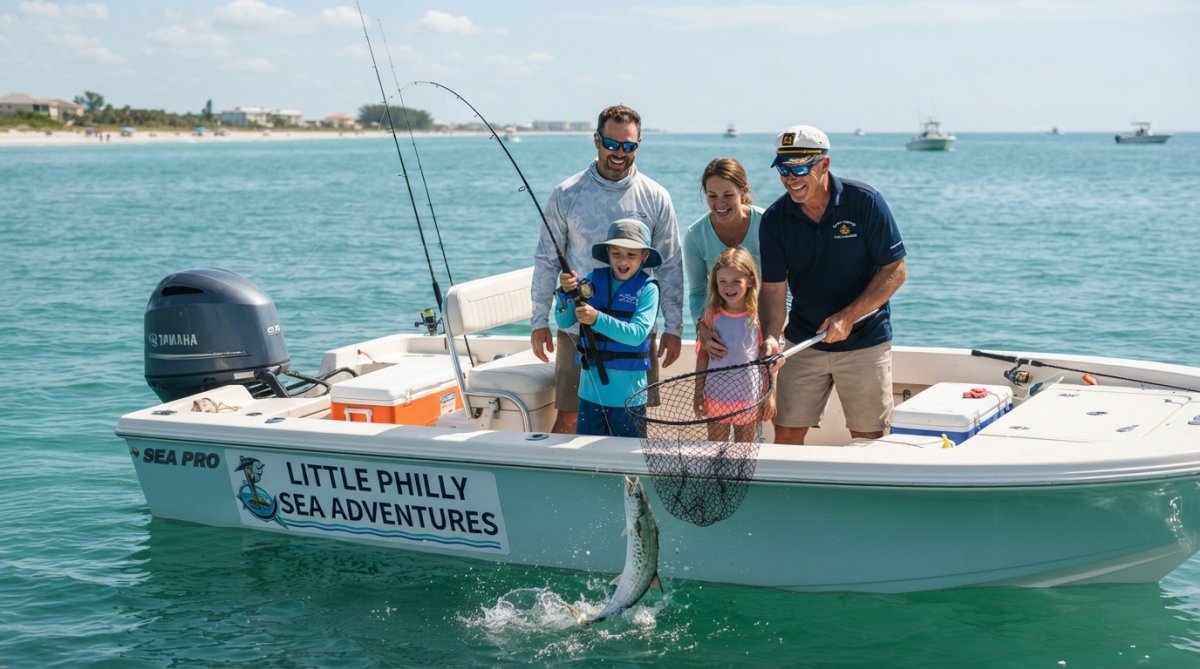
A top-tier trip also depends on vessel capacity and group size. If you have four people, you want a boat that fits four comfortably, not a party boat packed with a dozen strangers. Look for operators who ask about your group's experience level before suggesting a trip duration. The best charters match the plan to the people.
How to Choose a Fishing Charter Captain You Can Trust
A fishing charter captain is the single most important factor in whether your day succeeds. You are trusting them with your safety, your money, and your family's enjoyment, so vetting credentials matters more than flashy marketing photos. This section gives you a practical, step-by-step vetting process.
Step 1: Verify the Credential, Not Just the Claim
Every captain operating a vessel that carries passengers for hire must hold a credential issued by the U.S. Coast Guard (USCG) under 46 CFR Part 46. The most common credential is a Merchant Mariner Credential (MMC) with a Master's or OUPV (Operator of Uninspected Passenger Vessels) endorsement. The OUPV, commonly called a "six-pack" license, allows a captain to carry up to six passengers; a Master's license is required for larger vessels.
Do not just take the captain's word for it. Ask for their credential number and issuing date, then verify the status through the National Maritime Center's online verification portal. This check takes less than two minutes and confirms the license is active. A legitimate captain will not hesitate to provide this information.
Step 2: Ask About Insurance Coverage Directly
A USCG license does not automatically mean the operator carries commercial liability insurance; many small charter operators run without it to keep costs down. If an accident occurs and the operator is uninsured, you could be personally liable for medical expenses or property damage.
Ask the captain or booking agent directly: "Can you provide a certificate of insurance showing commercial general liability coverage for this vessel?" A professional operation will share it without hesitation. If the answer is vague, evasive, or met with surprise, treat that as a definitive red flag. The certificate should name the vessel and operator and show a policy period covering your trip date.
Step 3: Evaluate the Pre-Trip Conversation
Beyond credentials and insurance, the pre-trip conversation is a strong predictor of the on-water experience. A professional captain will ask about your group's experience level, any children aboard, seasickness concerns, and what you hope to catch, while also clarifying what the trip includes and what it does not.
Pay attention to how the captain answers your questions. Are they specific and current, referencing recent fishing reports and seasonal patterns? Ask about the last week's fishing: what species are running, what depths are productive, and what bait is working. A captain who reads the water daily will have a detailed, confident answer.
Step 4: Look for a Written Trip Agreement
A professional operator will provide a written confirmation outlining the date, time, duration, target species, total price, and cancellation policy. This document protects both you and the captain. If an operator refuses to provide a written agreement or insists on a handshake deal, consider that a significant risk.
A common pattern among top-rated operators is to require a deposit to hold the date, with the balance due on the day of the trip. The deposit policy should be clearly stated in the agreement, along with terms for rescheduling due to weather.
Inshore vs. Offshore: Matching the Trip to Your Group
Choosing between inshore and offshore fishing is about matching the water to your group's experience and tolerance for a longer ride. Inshore trips stay inside the bays and passes, offering calm water, shorter durations, and consistent action with species like trout, redfish, and snook. These trips are ideal for families with young kids or anyone prone to seasickness.
Offshore trips push into the deep sea, targeting grouper, snapper, and amberjack. The ride is longer, the water is rougher, and the duration often stretches to a full day. Offshore charters reward experienced anglers who want a trophy catch, but they can overwhelm a first-time angler. A shared charter is a budget-friendly way to test offshore waters, though you sacrifice personalized attention.
| Trip Type | Best For | Typical Duration | Water Conditions |
|---|---|---|---|
| Inshore | Families, beginners | 4-6 hours | Calm, protected bays |
| Offshore | Experienced anglers | 8-12 hours | Open Gulf, rougher seas |
| Flats Fishing | Sight-casters | 4-5 hours | Shallow grass flats |
What to Bring on a Fishing Charter: Gear Checklist
Packing smart makes the difference between a comfortable day and a miserable one. Most reputable charters provide rods, reels, tackle, and live bait, so you should not need to haul your own gear unless you prefer your personal setup. What you do need is sun protection, hydration, and the right layers.
Bring sunscreen, polarized sunglasses, and a hat to cut glare off the water. Pack a light rain jacket because Gulf Coast weather changes fast, and a cooler with water and snacks. Leave glass bottles at home; most vessels prohibit them for safety reasons. Your fishing license is typically covered by the charter, but confirm this at booking.
Book your unforgettable experience today! →
Vetting Safety, Insurance, and No-Surprise Pricing
Safety and price transparency are the two pillars of a trustworthy fishing charter. While the previous section focused on the captain's credentials, this section drills into the vessel itself and the financial terms of your booking.
Inspected vs. Uninspected Vessels: What It Means for You
The USCG categorizes passenger vessels into two broad classes: inspected and uninspected. An inspected vessel has undergone a rigorous federal safety examination, including hull integrity, fire suppression, life raft capacity, and crew training, and carries a Certificate of Inspection (COI). Uninspected vessels, which include most six-pack charter boats, are not subject to the same level of federal oversight, though they must still carry basic safety equipment.
This distinction matters because it affects the level of safety oversight. A six-pack charter boat operating under an OUPV license is an uninspected vessel. That does not mean it is unsafe; it means the safety burden falls more heavily on the operator's diligence. When you book, ask whether the vessel is inspected or uninspected. If inspected, ask to see the COI. If uninspected, ask about the safety equipment inventory, including life jackets, fire extinguishers, flares, and a VHF radio.
US Coast Guard boating safety division sets the federal standards for both inspected passenger vessels and uninspected charter boats. The agency's website provides a searchable database of vessel documentation and safety recall information. A quick check there can confirm whether a vessel has any outstanding safety issues.
The Insurance Question, Revisited
Commercial liability insurance is not mandated by federal law for uninspected charter vessels. While a captain may hold a valid USCG license, they may operate without liability coverage, leaving you exposed if an accident results in injury or property damage.
Ask for a certificate of insurance before you pay a deposit. The certificate should list the operator as the insured, name the vessel, and show a policy period covering your trip date. If the operator cannot provide this, ask yourself whether the savings are worth the risk.
No-Surprise Pricing: A Comparison Framework
Price transparency is not just about the quoted rate; it is about the total cost of the trip. A common pattern is to quote a base rate and then add surcharges for fuel, bait, tackle, cleaning, or dock fees, which can increase the final bill by 15-25%.
To compare operators fairly, ask each one for a single, all-inclusive quote covering the trip duration, vessel, captain, all fishing gear, bait, ice, fuel, and any applicable taxes or fees. Ask the operator to confirm it in writing. When comparing operators side by side, the all-inclusive price is the only number that matters.
| Cost Component | Operator A | Operator B |
|---|---|---|
| Base Trip Rate (4 hours) | $450 | $400 |
| Fuel Surcharge | Included | $50 |
| Bait and Tackle | Included | $25 |
| Fishing License | Included | $15 |
| Dock Fee | Included | $10 |
| Total All-Inclusive | $450 | $500 |
This simple framework reveals that the lower base rate is not always the better deal. A reputable operator quotes a total that includes everything, with no mystery surcharges at the dock.
Weather Cancellation Policies: The Fine Print That Matters
The Gulf Coast weather is unpredictable, and cancellations are a normal part of the business. The key question is not whether a trip can be canceled, but how the operator handles it. Ask for the specific policy in writing. A fair policy allows you to reschedule without penalty if the captain cancels due to weather. Some operators offer a full refund, while others offer a credit toward a future date. Both are reasonable, as long as the terms are clear before you book.
A less fair policy keeps your deposit if you cancel for any reason, including weather, or requires you to absorb the loss if the captain cancels. Treat vague or one-sided policies as a red flag. A professional operator structures their policy to build trust, not to profit from cancellations.
Book Your Gulf Coast Fishing Trip With Confidence
Finding the right fishing charters alternative comes down to asking the right questions before you hand over a deposit. Verify the captain's credentials, confirm the total price in writing, and choose a trip type that matches your group's comfort level.
Little Philly Sea Adventures offers premium Gulf Coast experiences, specializing in boat rentals, jet ski tours, and fishing charters. Our commitment to a 'no surprises' policy ensures a transparent and seamless booking process for all our guests. Whether you are a first-time angler or a seasoned pro, the Gulf Coast is waiting.
[Discover Anna Maria Island(https://www.littlephillyseaadventures.com/es-mx/service-area/anna-maria-fl) visitor information | annamariaisland.com] offers a helpful starting point for planning your trip around seasonal fishing patterns and local events.
Get started with Little Philly Sea Adventures and book your unforgettable Gulf Coast experience today.
Frequently Asked Questions
What should I look for when choosing a fishing charter service?
Start with safety credentials: confirm the captain holds a USCG license and the vessel carries proper insurance. Then check trip duration, vessel capacity, and target species to match your group. Read recent customer reviews for patterns about punctuality and communication. Ask about the deposit policy and cancellation terms before booking. A charter that answers these questions clearly and lists what is included, like tackle and fishing licenses, is more likely to provide a no-surprise experience.
What is the difference between inshore and offshore fishing charters?
Inshore charters stay in bays, flats, and nearshore waters, targeting species like redfish, snook, and trout. Trips are shorter, often 4 hours, and the water is calmer, which suits families and first-time anglers. Offshore charters travel to deeper Gulf waters for larger fish like grouper and amberjack. These trips run 6 to 12 hours and require more experience. For a family vacation, inshore trips offer more action per hour and less risk of seasickness.
How much should I tip a fishing charter captain?
Standard practice is to tip the captain and mate 15 to 20 percent of the total trip cost when you are satisfied with the service. If the crew worked hard to find fish, cleaned your catch, and helped beginners, the higher end of that range is appropriate. Cash is preferred. Some charters include gratuity in their pricing, so check your booking confirmation to avoid double-tipping. Ask about the policy when you book if it is not stated.
Are there specific requirements for fishing licenses on private charters?
On most private charters, the captain holds a blanket license that covers all passengers on the boat, so you do not need to purchase a separate saltwater fishing license. This should be confirmed during booking. If you book a boat rental without a captain, you are responsible for obtaining your own license. Charter services usually list whether a license is included in the trip price, and reputable captains ensure compliance with state regulations.