 ultimate-guide
Renting a Boat for Large Groups: The 2026 Guide
Table of Contents
- What Counts as a Large Group Boat Rental
- Captained Boat Rental vs Bareboat: Which Fits Your Group
- US Coast Guard Passenger Vessel Regulations for Group Charters
- Cost Per Head: What Drives Group Charter Pricing
- How to Plan a Group Boat Excursion Without Surprises
- Insurance, Liability, and Accessibility for Group Organizers
- Frequently Asked Questions
Last Updated: September 16, 2026
What Counts as a Large Group Boat Rental
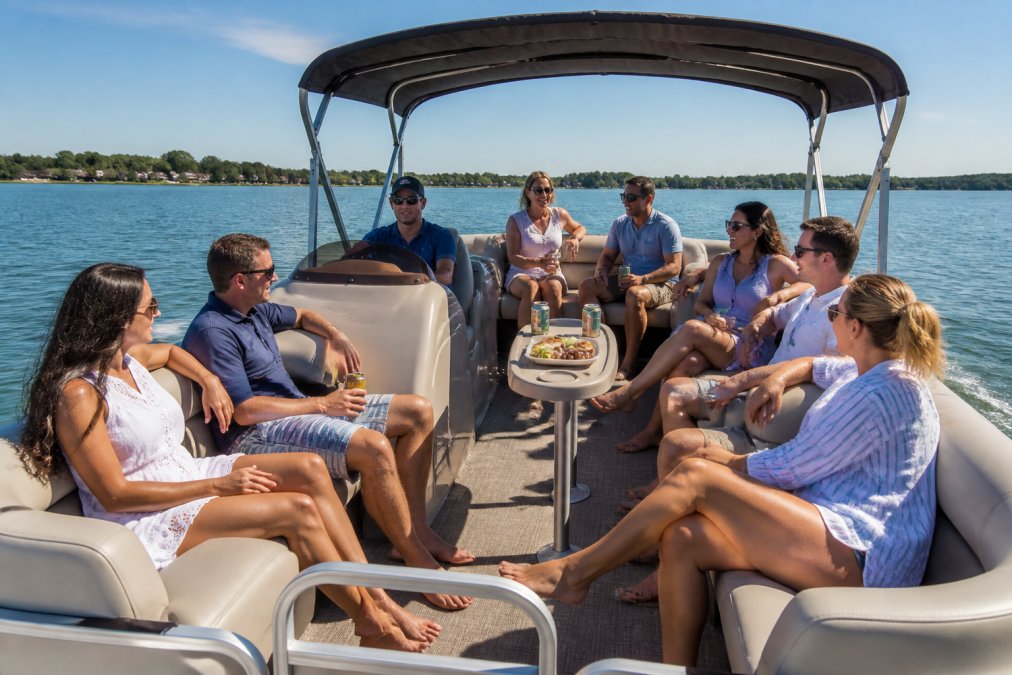
Renting a boat for large groups means securing a vessel rated to carry roughly eight or more passengers, which almost always pushes you from a standard rental into a larger pontoon, a party boat, or a captained charter. We see this constantly from groups heading out of Holmes Beach and Anna Maria Island. The threshold matters because it changes which vessels are legal for your headcount, whether you need a licensed captain, and how your bill gets calculated.
Guest Capacity by Vessel Type
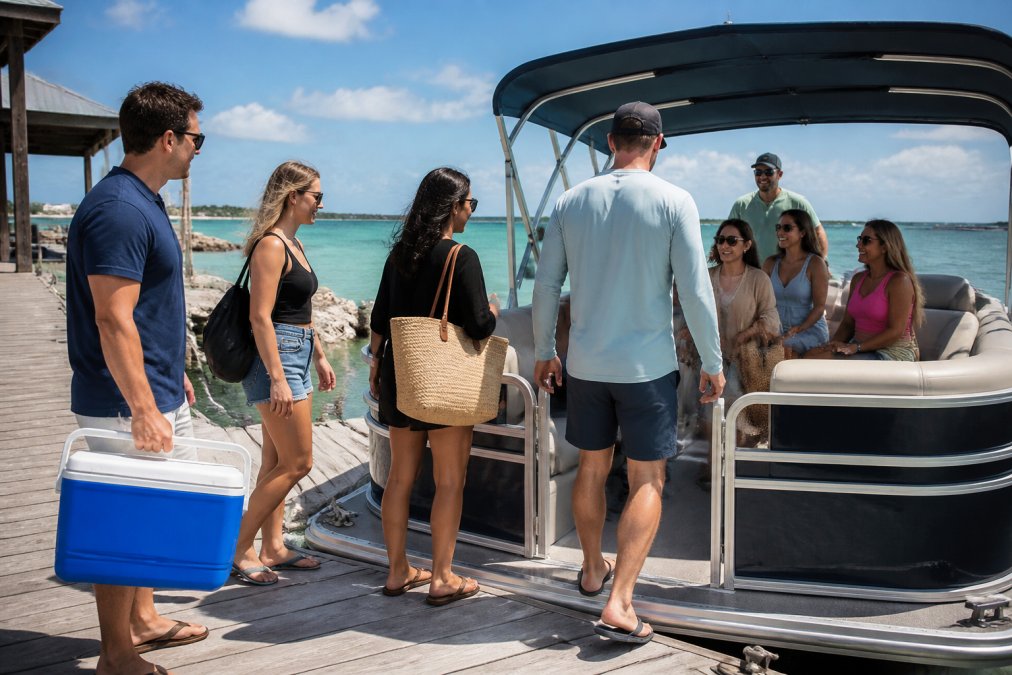
Capacity is set by the vessel's manufacturer plate and Coast Guard rating, not by how many people can squeeze aboard. A pontoon typically handles 8-12 guests, a party boat or deck boat 12-30, and a mid-size yacht charter often tops out around 12-13 for bareboat. The plate number is a legal maximum, not a target. If your group is 14, you are renting a party boat or splitting into two vessels, knowing that before you call saves everyone time.
Captained Boat Rental vs Bareboat: Which Fits Your Group
The biggest decision for any group outing is captained charter versus bareboat. A captained charter includes a licensed captain who handles navigation, docking, safety briefings, and local knowledge. A bareboat rental means you take the helm, which requires demonstrated boating experience and, for larger vessels, a resume the company will review. For groups the calculus is simple: the more people, the more the captain's fee spreads across the headcount.
When a Bareboat Rental Still Works
Bareboat rentals make sense for small, experienced groups of four to six who know the water and want full control of the itinerary. They fall apart when someone has never docked a boat and the wind picks up. If your group includes first-timers, kids, or anyone who wants to drink, a captained charter removes the risk. A common mistake is booking bareboat to save money, then discovering the deposit, fuel, and damage exposure eat the savings.
| Factor | Captained Charter | Bareboat Rental |
|---|---|---|
| Who drives | Licensed captain | You or your group |
| Experience needed | None | Demonstrated boating history |
| Best for | Groups of 8+, celebrations, families | Small experienced groups |
| Cost structure | Flat rate, gratuity expected | Lower base, higher deposit risk |
| Itinerary control | Captain-led, flexible | Fully yours |
US Coast Guard Passenger Vessel Regulations for Group Charters
Any vessel carrying more than six passengers for hire falls under US Coast Guard inspection and licensing rules, which is the line that separates a casual rental from a regulated passenger vessel. According to US Coast Guard boating safety regulations, inspected vessels must meet specific requirements for life jackets, fire extinguishers, and crew licensing. This is why a six-person pontoon rental and a fifteen-person party boat are governed by entirely different rulebooks.
Cost Per Head: What Drives Group Charter Pricing
Pricing for group charters depends on vessel size, trip length, season, and add-ons, so no single number fits every outing. What matters is understanding the line items so nothing surprises you at the dock. Most operators quote a base rate, then layer on fuel, gratuity, and sometimes a cleaning or security deposit. Fuel surcharges are the most common source of sticker shock, and a transparent operator will say upfront whether fuel is included or billed separately.
How to Plan a Group Boat Excursion Without Surprises
Planning a group boat excursion comes down to locking the logistics before anyone boards. "Book early and confirm the price" is not enough when you are herding twenty people onto a dock at 9 a.m. This checklist is built for the organizer, in the order the decisions have to be made.
Phase 1: Lock the Headcount and the Vessel (2-6 Weeks Out)
- Get a firm, paid headcount. A verbal "maybe" is not a headcount. Collect a deposit from each guest before you book.
- Match that number to a vessel's rated capacity, not its comfortable capacity. A pontoon rated for 12 is not a good fit for 12 adults plus coolers plus a grill.
- Decide captained versus bareboat based on experience and group size.
- Get the all-in price in writing: base rate, fuel treatment, gratuity, taxes, cleaning fee, and security deposit.
- Confirm the cancellation policy and weather contingency in writing, including who decides to cancel and by what hour.
Phase 2: Paperwork, Waivers, and Payment (1-2 Weeks Out)
This is the phase competitors skip, and where most group trips go sideways.
- Ask the operator for the waiver or liability release and send it to every adult in advance. Digital waivers signed the night before save 20-30 minutes at the dock.
- Confirm whether minors need a parent or guardian signature, and whether a guardian must be present.
- Collect payment before the trip, not after. Chasing eight people for $140 each afterward is the most common organizer complaint.
- If alcohol is involved, confirm the policy in writing. Many captained charters allow beer and wine but prohibit glass and hard liquor; some prohibit alcohol entirely.
- Ask what is included: coolers, ice, life jackets in adult and child sizes, water sports gear, catering, and whether a grill is available.
- Verify the BYOB policy and whether glass is allowed aboard.
Phase 3: The Day-Of Logistics Checklist
- Confirm boarding time versus departure time, they are almost never the same. Build in a 30-minute buffer for a group arriving in separate cars.
- Send the dock address, a pin drop, and parking instructions to every guest the night before. Marinas often have limited parking, and overflow lots can be a 10-minute walk away.
- Assign a secondary contact with the confirmation number in case the organizer's phone dies.
- Bring a printed or downloaded copy of the confirmation and waiver list. Cell service at the dock is not guaranteed.
- Confirm the return time and whether the boat returns to the same dock.
- Designate a sober driver for the ride home if alcohol is served aboard.
Cost-Per-Head: The Math That Actually Matters
A $900 charter for 12 people is $75 per head. A $1,200 charter for 20 people is $60 per head. The larger boat costs more on the invoice and less per person. This counterintuitive math is why splitting a group across two smaller boats is almost always more expensive once you add a second captain, fuel charge, and deposit.
When you compare quotes, build a simple per-head table:
Book your unforgettable experience today! →
| Line item | Boat A (12 guests) | Boat B (20 guests) |
|---|---|---|
| Base rate | $900 | $1,200 |
| Fuel (if not included) | $80 | $110 |
| Gratuity (customary 15-20%) | $150 | $200 |
| Cleaning fee | $50 | $75 |
| Security deposit (refundable) | $300 | $500 |
| All-in total | $1,480 | $2,085 |
| Cost per head | $123 | $104 |
Itinerary Planning
A good captain will suggest a route that fits your time window and interests, a sandbar stop, a dolphin-watching pass, or a fishing spot. For groups, the itinerary matters more than for a couple because different guests want different things. Ask the captain to build in one anchor-and-swim stop and one scenic cruise segment so the group gets variety without burning the charter on transit.
Insurance, Liability, and Accessibility for Group Organizers
Liability is the part most group organizers never think about until something goes wrong. When you book a bareboat rental, you are typically the operator in the eyes of the law, carrying responsibility for your passengers and any damage to the vessel. Captained charters shift that operational liability to the licensed operator, but still confirm what marine insurance covers and what the security deposit protects against.
Who Is Liable When You Book for a Group?
The answer depends on the charter type, and the distinction matters more for groups because you are deciding on behalf of people who are not in the room.
- Bareboat rental: You are the operator. If a guest is injured, the boat is damaged, or a third party is harmed, exposure generally runs to you first. Your homeowners policy or a standalone marine policy may or may not respond, most homeowners policies exclude watercraft above a certain horsepower or length, so do not assume you are covered.
- Captained charter: The licensed operator carries the operational liability. Your exposure is typically limited to your own conduct and the security deposit for damage caused by your group.
- Either way: Ask whether the operator carries marine insurance, what the damage claim process looks like, and whether your travel or event insurance would fill any gaps.
What the Security Deposit Actually Protects
A security deposit is not a fee, it is a hold against damage, excessive cleaning, late return, or missing equipment. Ask three questions before you pay:
- What is the refund timeline after the trip? Common answers range from 3 to 10 business days.
- What triggers a partial or full forfeiture? Get the list in writing.
- Is the deposit charged to a card or held as a pre-authorization? A pre-authorization ties up credit but does not leave your account; a charge does.
Accessibility and Inclusivity: The Questions Nobody Asks
If your group includes someone with limited mobility, a wheelchair, an older adult, or young children, find out whether the vessel works before you book, not at the dock. Booking platforms rarely surface this, so ask directly.
- Boarding: Is there a ramp, gangway, or step-down boarding? How many steps from dock to deck? Is the dock floating or fixed, and does it shift with the tide?
- Onboard movement: Is there a clear path to a seat, or does the deck require stepping over benches and coolers? Are there handholds?
- Restrooms: Is there a marine head (toilet) aboard, and is it accessible? For groups of 10 or more, a working head is not optional.
- Shade and seating: Is there a covered area, and are there seats with backs? Sun exposure on an open deck is a real issue for older guests and young children.
- Parking-to-dock distance: How far is the walk from parking to boarding, and is the surface paved, gravel, or sand?
- Service animals: Confirm the operator's policy in advance. Most charters allow service animals, but the layout may affect where the animal can safely be.
Frequently Asked Questions
What is the maximum passenger capacity for private boat rentals?
Capacity depends on vessel size and whether the boat is inspected by the US Coast Guard. Uninspected recreational boats are limited by the manufacturer's plate, often 12 people or fewer. Inspected passenger vessels carrying more than six passengers for hire must hold a Coast Guard Certificate of Inspection, which states the maximum number of passengers allowed. For a large group boat rental, ask the operator for the vessel's certified passenger limit before you book.
Do I need a captain for a large group boat rental?
For groups above six paying passengers, federal rules generally require a licensed captain operating under a Coast Guard Certificate of Inspection. Many operators also require a captain for any group charter regardless of size, since it shifts navigation and safety responsibility to the crew. A bareboat rental, where you operate the boat yourself, is only an option when no captain or crew is provided and you meet the operator's boating experience requirements.
How far in advance should I book a boat for a large group?
Book as early as possible, especially for weekend dates, holidays, and peak winter season when demand from out-of-state visitors is highest. Larger vessels and captained charters have limited availability because fewer boats can legally carry big groups. Four to eight weeks ahead is a reasonable target for most group outings, and three or more months for corporate events, bachelor parties, or holiday weekends.
Are there specific insurance requirements for large group charters?
Commercial operators carrying passengers for hire must hold marine insurance, and inspected vessels are required to carry coverage that meets Coast Guard financial responsibility rules. As the organizer, you should confirm the operator's policy covers passengers and ask whether a security deposit or damage waiver applies. If your event involves alcohol or water sports, check what the policy excludes, and consider whether your own event insurance is needed for a corporate outing.