 ultimate-guide
Renting Boats in Gulf Coast Florida: 2026 Guide
Table of Contents
- Why Renting Boats in Gulf Coast Florida Beats a Hotel Pool Day
- Anna Maria Island Boat Rental Pricing: What Actually Drives the Number
- Boating Safety Requirements Florida Renters Need to Know Before Casting Off
- Gulf Coast Boat Rental Hidden Fees: The Line Items That Blow Up Your Total
- Boat Rental Company Comparison: What to Check Before You Book
- Best Boating Spots Around Anna Maria Island and Holmes Beach
- Choosing the Right Boat for Your Group
- Frequently Asked Questions
Last Updated: September 13, 2026
Why Renting Boats in Gulf Coast Florida Beats a Hotel Pool Day
Renting boats in Gulf Coast Florida is the difference between watching the water from a lounge chair and actually being on it. This guide from Little Philly Sea Adventures covers what drives pricing, what the law requires, and how to avoid the fees that catch first-timers off guard.
A hotel pool gives you a rectangle of chlorinated water and a fight for loungers. A boat gives you sandbars, mangrove channels, and dolphin sightings within twenty minutes of the dock. For families, couples, and groups, the math rarely favors the pool.
What most guides get wrong is treating the booking like a car rental: pick the cheapest rate, show up, drive away. Boat rentals don't work that way. Pricing is quoted, not listed. Safety requirements are legal, not optional. And the final invoice depends on decisions you make before you ever step aboard.
Below, we break down exactly how pricing works, who needs a boater education card, which fees to question upfront, and where to actually go once you're on the water.
Anna Maria Island Boat Rental Pricing: What Actually Drives the Number
Anna Maria Island boat rental pricing depends on four variables: boat type, trip duration, group size, and season. There is no single market rate because no two operators price the same way.
A common approach is to quote a base rate for the vessel, then add fuel, taxes, and any captain or guide fee separately. That structure is why two quotes for the same six-hour trip can differ by a wide margin.
Half-Day vs. Full-Day Rates and Group Size
Half-day charters typically run four to five hours; full-day trips run seven to eight. The per-hour cost drops on longer bookings because the operator's fixed costs, dock time, cleaning, and setup, get spread across more hours.
Group size matters more than most renters expect. A boat rated for six people and a boat rated for ten are different vessels with different insurance and different crew requirements. If you're a party of eight, say so at the time of booking, not at the dock.
Why You Won't See a Price List Upfront
Operators don't publish rate cards because the number genuinely changes with date, duration, and demand. Peak season weekends price differently than a Tuesday in the off-season.
The practical move: call or message with your exact date, group size, and how long you want the boat. A transparent operator will give you a total, not a teaser rate.
Boating Safety Requirements Florida Renters Need to Know Before Casting Off
Boating safety requirements Florida renters must meet are set by state law and enforced on the water. The core rule: anyone born on or after January 1, 1988 who operates a vessel with a motor of 10 horsepower or more needs a Florida Boater Education Card, unless a qualified adult is aboard and supervising (myfwc.com).
Rules and exemptions change, so confirm current requirements through the Florida Fish and Wildlife Conservation Commission boating regulations before your trip.
Who Needs a Florida Boater Education Card
If you were born before January 1, 1988, you can generally operate without the card. If you were born on or after that date, plan to complete an approved boater safety course and carry proof. Many rental operators include a pre-trip briefing that covers the same ground, but a briefing is not the same as the card.
Required Safety Gear on Board
Every vessel must carry Coast Guard-approved life jackets sized for each person aboard, a sound-producing device, a fire extinguisher where required, and navigation lights for low-light operation. Children under six must wear a life jacket while the vessel is underway. For the current equipment list, see the U.S. Coast Guard boating safety requirements.
A common mistake is assuming the rental company has already handled all of this. They usually have. Verify it anyway during your walkthrough.
Book your unforgettable experience today! →
Gulf Coast Boat Rental Hidden Fees: The Line Items That Blow Up Your Total
Gulf Coast boat rental hidden fees are rarely hidden on purpose; they're disclosed in a paragraph nobody reads. The damage comes from four line items.
| Fee Type | What Triggers It | How to Handle It |
|---|---|---|
| Fuel surcharge | Boat returned with less fuel than at pickup | Ask for the fuel policy in writing |
| Cleaning fee | Excess sand, spills, or pet hair | Confirm what counts as "excess" |
| Late return | Arriving past your scheduled dock time | Build a 20-minute buffer into your plan |
| Damage deposit | Any post-trip claim against the vessel | Photograph and video the boat at pickup |
Fuel is the one that surprises people most. Some operators include fuel in the rate; others bill it at the pump price on return. Neither is wrong, but you should know which one you're booking.
Boat Rental Company Comparison: What to Check Before You Book
The right operator is the one that answers your questions before you pay, not the one with the flashiest website. Use these criteria to compare any company you're considering.
- Written total cost: Do they give you an all-in number, including fuel and tax, before the deposit?
- Damage policy: Is there a deposit, and what's the process for a claim?
- Captain and guide credentials: For fishing charters, is the captain licensed and how long have they fished these waters?
- Beginner support: What training or supervision is provided for first-time jet ski or boat operators?
- Group capacity: Can they actually accommodate your party size in one vessel?
- Local knowledge: Do they operate in the Holmes Beach and Anna Maria Island area specifically?
This is where Little Philly Sea Adventures draws its line. Our no surprises policy means the number you're quoted is the number you pay, with fuel, taxes, and inclusions stated upfront rather than discovered at the dock.
Best Boating Spots Around Anna Maria Island and Holmes Beach
The best boating spots around Anna Maria Island and Holmes Beach sit within a short run of the dock, which is why the area suits half-day trips as well as full-day ones.
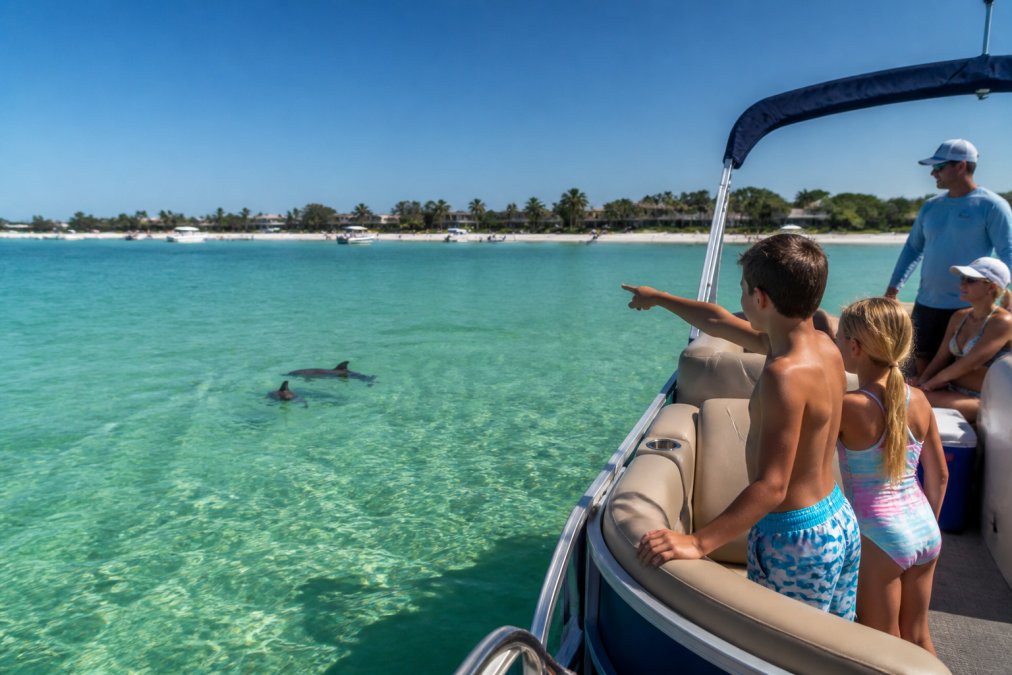
A few reliable destinations:
- Bean Point: The northern tip of Anna Maria Island, calm on the bay side, worth the trip for the sandbar at low tide.
- Egmont Key: A short run south with a historic lighthouse and clear water for snorkeling.
- Longboat Pass: A good spot for watching boats move through the channel, with shallow flats nearby.
- Local sandbars: Ask your operator which bars are exposed on your trip date. They shift with the tide.
Choosing the Right Boat for Your Group
Boat selection comes down to three questions: how many people, how much shade, and how fast do you want to go.
A pontoon fits six to ten comfortably and is the right call for families with young kids, coolers, and gear. A center console handles four to six and gets you to fishing grounds faster. Jet skis suit two riders and short, high-energy runs. For a bachelor party of eight, a pontoon or a deck boat is the practical answer, and you should confirm capacity in writing.
Tell the operator your group size and what you want to do. The right vessel follows from there.
Frequently Asked Questions
Do I need a boating license to rent a boat in Florida?
Florida does not issue a boating license, but anyone born on or after January 1, 1988 must carry a Florida Boater Education Card to operate a motorized vessel with 10 horsepower or more. You can earn the card through an approved online course, and many rental companies, including Little Philly Sea Adventures, walk first-timers through the rules before you leave the dock. If you were born before that date, you are exempt from the card requirement.
What is the average cost of a boat rental on the Gulf Coast?
Rates depend on the boat type, group size, and how long you book. A half-day pontoon rental for a family of six costs less than a full-day center console with a captain, and prices shift with the season. Little Philly Sea Adventures does not publish flat rates because every trip is built around your group. Visit their website or call for a current quote, and ask for the total including fuel, taxes, and any add-ons.
What should I look for when choosing a boat rental company?
Ask three questions before you book: What is the total cost including fuel and taxes? What safety gear and briefing are included? What is the damage policy if something gets scratched or broken? A transparent operator answers all three in writing. Little Philly Sea Adventures built its no surprises policy around exactly these points, so you know the full picture before you commit.
Are there hidden fees when renting a boat in Anna Maria Island?
Hidden fees usually show up as fuel surcharges, cleaning charges, or late-return penalties that were not mentioned at booking. A reputable company lists every possible charge upfront. Ask whether fuel is included or billed at the pump, whether a cleaning fee applies, and what the deposit covers. Little Philly Sea Adventures includes these details in the booking confirmation so the final bill matches the quote.
What safety equipment is required on rental boats in Florida?
Florida law requires a U.S. Coast Guard-approved life jacket for every person on board, a throwable flotation device for boats 16 feet and longer, a fire extinguisher, a sound-producing device like a whistle or horn, and navigation lights for nighttime operation. Rental companies must provide this gear and show you where it is stored. Little Philly Sea Adventures reviews each item with you during the pre-departure briefing.
Can I rent a boat for a full day or half day?
Most Gulf Coast operators offer both half-day and full-day options, with half-day trips running about four hours and full-day trips running six to eight hours. A half day works well for a morning snorkel trip or a quick fishing run, while a full day gives you time to reach Egmont Key, stop at a sandbar, and still make it back for sunset. Little Philly Sea Adventures can customize the length based on your group's plans.