 how-to
Safe Jet Ski Lessons for Beginners: A 2026 Guide
Table of Contents
- Why Beginners Need Proper Training for Jet Ski Lessons
- Jet Ski Safety Requirements for Beginners
- What to Wear for Jet Ski Lessons
- How Long Is a Typical Jet Ski Lesson
- Essential Skills You'll Learn: Starting, Stopping, and Turning
- Water Safety, Navigation Rules, and Right-of-Way
- Your Pre-Ride Inspection Checklist
- What to Bring and How to Prepare for Your First Lesson
Last Updated: August 30, 2026
Why Beginners Need Proper Training for Jet Ski Lessons
Safe jet ski lessons for beginners aren't optional, they're foundational. A personal watercraft accelerates faster than most cars, responds instantly to throttle input, and operates in an environment where mistakes carry real consequences. Without proper instruction, a first-time rider becomes a liability to themselves and everyone nearby.
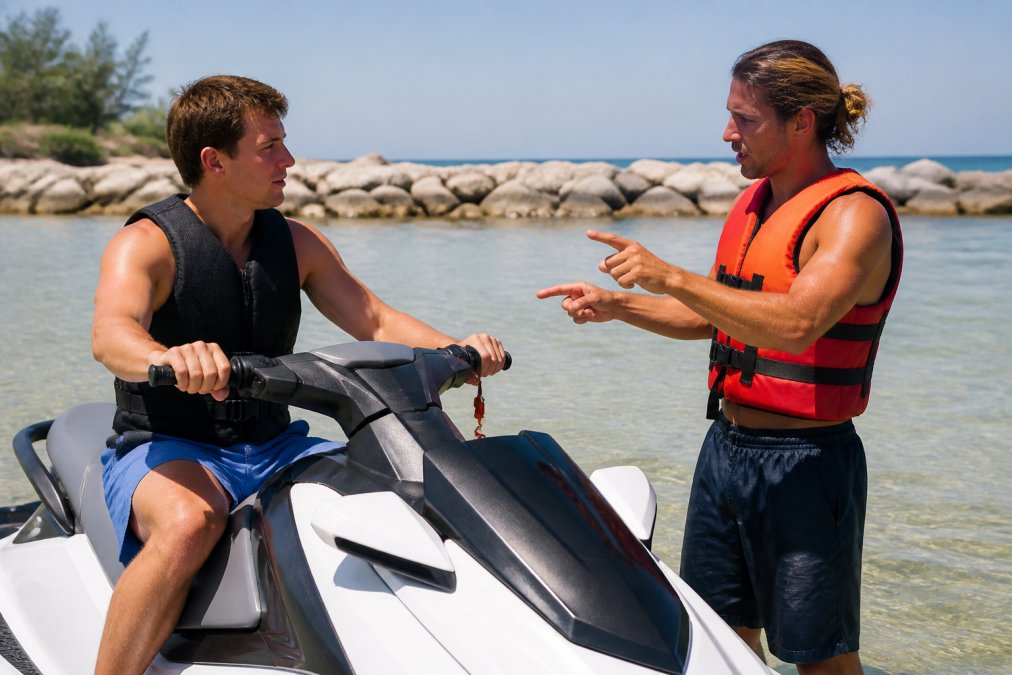
Structured training is the difference between a nervous beginner and a confident, safe operator. A qualified instructor teaches you how the machine responds before you're alone on the water. You learn emergency procedures while someone experienced watches. You practice stopping and turning in controlled conditions, not in a panic moment.
Little Philly Sea Adventures understands this reality. Safe jet ski lessons for beginners start with the premise that knowledge prevents accidents. An instructor walks you through every control before the engine fires up. You understand what the kill switch does and why it matters. You know how throttle control works and what happens when you apply it in shallow water versus open Gulf. The Coast Guard and maritime safety agencies emphasize operator education because PWC accidents spike when riders skip training. A few hours of instruction now prevents the scenarios that end vacations in emergency rooms.
Jet Ski Safety Requirements for Beginners
Operating a personal watercraft requires compliance with specific safety standards. Federal and state regulations exist because PWCs are boats, and boats require operator education.
Most jurisdictions require operators to hold a boating safety certificate or complete an approved boating education course (nasbla.org). The specifics vary by state, but the principle is universal: proof that you understand navigation rules, right-of-way principles, and emergency procedures. Check your local regulations before booking.
Federal law requires certain equipment on every personal watercraft. Each piece exists because it has saved lives. An instructor reviews these requirements with you before your safe jet ski lessons for beginners begin.
Life Jackets and Personal Flotation Devices
A life jacket is non-negotiable. Federal law requires a Coast Guard-approved personal flotation device (PFD) for every person on a PWC (uscg.gov). If you fall off a jet ski, a life jacket is the difference between treading water and drowning. Jet skis move fast, and you can end up in the water farther from shore than you realize.
For safe jet ski lessons for beginners, instructors typically provide Coast Guard-approved life jackets. Wear it snug enough that it doesn't shift if you jump in the water, but loose enough to breathe comfortably. After five minutes in the sun, you stop noticing it. After ten minutes, you're grateful for the flotation if you take an unexpected swim.
Kill Switch and Emergency Equipment
The kill switch is a small lanyard attached to your wrist or life jacket. If you fall off, the lanyard pulls tight, instantly cutting the engine. A runaway jet ski is dangerous to you, to others, and to property. Your instructor will show you how to attach it and ensure it's secure.
Emergency equipment varies slightly by location and rental company, but typically includes a throwable flotation device and a first-aid kit. Know where they are before you need them. During safe jet ski lessons for beginners, your instructor points out every safety item and explains when you'd use it.
What to Wear for Jet Ski Lessons
Your clothing choices affect both safety and comfort on the water. The Gulf Coast sun is intense. The water, even in summer, is colder than you expect. Wind chill at speed makes a difference.
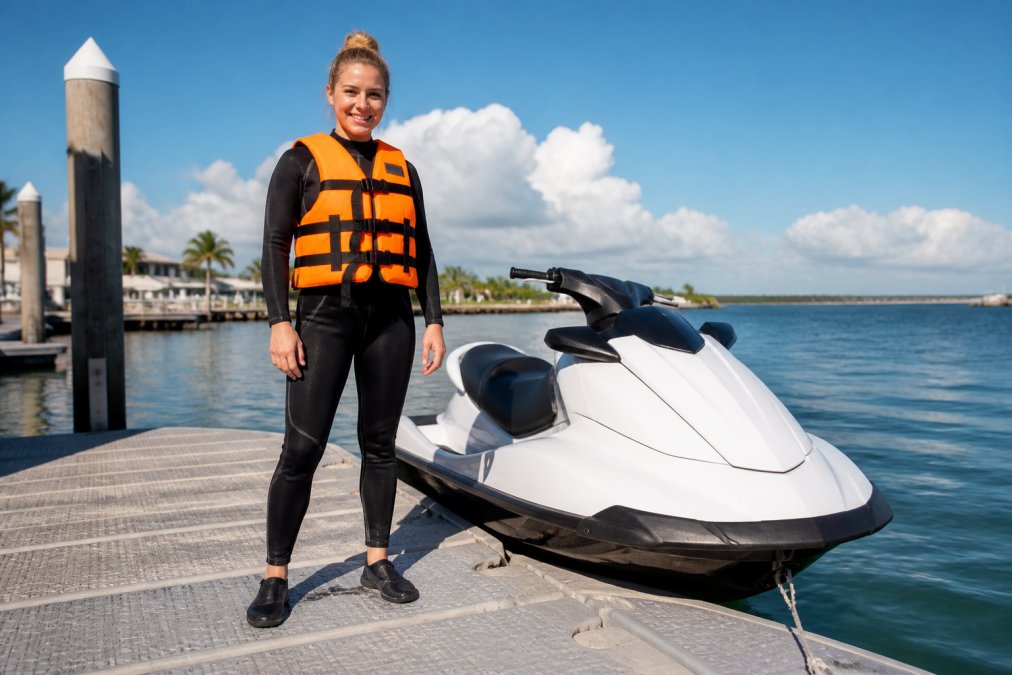
A wetsuit or rash guard is standard for jet ski lessons. These protect your skin from sun exposure, abrasion if you fall, and wind chill of speed. A quarter-inch wetsuit is usually sufficient for Gulf waters in warm months.
Water shoes or aqua socks are essential. Barefoot or in regular sneakers, you'll slip on a wet deck. Instructors won't let you on a jet ski without proper footwear.
Avoid cotton. Cotton absorbs water and loses all insulating value. Wear synthetic materials or neoprene. Bring a rash guard even if you don't think you'll need one; the sun reflects off the water and intensifies.
Sunscreen is non-negotiable. Apply SPF 30 or higher before your lesson and reapply if you're in the water for more than an hour (the CDC). The reflection off the water doubles your sun exposure.
Avoid loose items. Jewelry, watches, sunglasses, anything that can fall off will. Secure your phone and wallet on shore. Bring a towel and dry clothes in a waterproof bag. You'll be wet after your lesson.
How Long Is a Typical Jet Ski Lesson
Most safe jet ski lessons for beginners run between 60 and 90 minutes. This timeframe balances instruction, practice, and fatigue. Your brain absorbs a lot of new information. Your body learns new muscle movements. After 90 minutes, diminishing returns set in.
The first 15-20 minutes are classroom instruction covering safety fundamentals, equipment, controls, and what you'll practice. The next 30-40 minutes involve supervised on-water practice in shallow, calm water. You practice starting, basic throttle control, and gentle turns. The final 20-30 minutes might include slightly more open water or increased speed as you progress.
Little Philly Sea Adventures structures safe jet ski lessons for beginners to maximize learning in the time you have. Your instructor reads your progress and adjusts pacing accordingly.
Essential Skills You'll Learn: Starting, Stopping, and Turning
These three skills form the foundation of safe jet ski operation. Master them, and you've solved 80% of the challenge.
Starting Your Personal Watercraft
Starting a jet ski requires specific steps. First, ensure the kill switch lanyard is attached to your wrist or life jacket. Second, insert the key and turn it to the "on" position. Third, pump the throttle once to prime the fuel system. Fourth, turn the key to start. The engine should turn over within a second or two.
If it doesn't start, don't keep cranking. Stop, wait a few seconds, and try again. Continuous cranking floods the engine with fuel. Once the engine runs, let it idle for 10-15 seconds before applying throttle.
Throttle Control and Acceleration
Throttle control is where beginners struggle most. A jet ski's throttle is sensitive. A small movement creates noticeable acceleration. The instinct is to grip the throttle and hold it, exactly wrong.
Book your unforgettable experience today! →
Smooth, gradual throttle application is the key. Imagine accelerating a car with your pinky finger on the gas pedal. That's the sensitivity you're managing. In your safe jet ski lessons for beginners, your instructor will have you practice gentle acceleration in shallow water until your hands develop the feel for it.
Most beginners apply too much throttle too quickly, resulting in a jerky, uncomfortable ride and unnecessary risk. Your instructor will emphasize smooth, controlled application.
Deceleration and Emergency Stop Procedures
A jet ski has no brakes. To slow down, you reduce throttle. The ski gradually loses speed as the jet pump reduces thrust.
Smooth deceleration is gradual throttle reduction. Close the throttle slowly, and the ski slows smoothly. An emergency stop involves closing the throttle fully and may require shifting into reverse if your ski has that capability. The kill switch is the true emergency stop. If you fall off or lose control, the lanyard pulls tight and the engine cuts.
Practice both smooth and emergency stops during your safe jet ski lessons for beginners.
Water Safety, Navigation Rules, and Right-of-Way
A jet ski operates in shared water. Understanding navigation rules and right-of-way isn't optional.
Generally, larger, less maneuverable vessels have right-of-way over smaller, more maneuverable ones. A jet ski is small and maneuverable, so you typically yield to larger boats, sailboats, and commercial vessels. A sailboat under sail has right-of-way over a motorized jet ski.
No-wake zones are areas near docks, marinas, or residential shorelines where speed is restricted. Slow to idle speed, create no wake, and pass cautiously. These zones exist because wakes damage property and disturb people.
Operate your jet ski in daylight. Avoid fog, heavy rain, or dusk when visibility drops. Alcohol and jet skis don't mix. Operating a PWC under the influence is illegal and extremely dangerous. Stay alert and scan the water ahead and around you constantly.
Your Pre-Ride Inspection Checklist
Before every ride, perform a basic inspection. This takes five minutes and prevents most mechanical issues.
Check the fuel level first. Fill up if you're below three-quarters full. Inspect the kill switch lanyard and ensure it's attached securely. Check the throttle cable by gripping it and moving it smoothly from idle to full. Look at the jet intake underneath the ski and clear any visible debris. Inspect the hull for cracks or damage. Check that all drain plugs are secure. Test the engine start one more time on the dock.
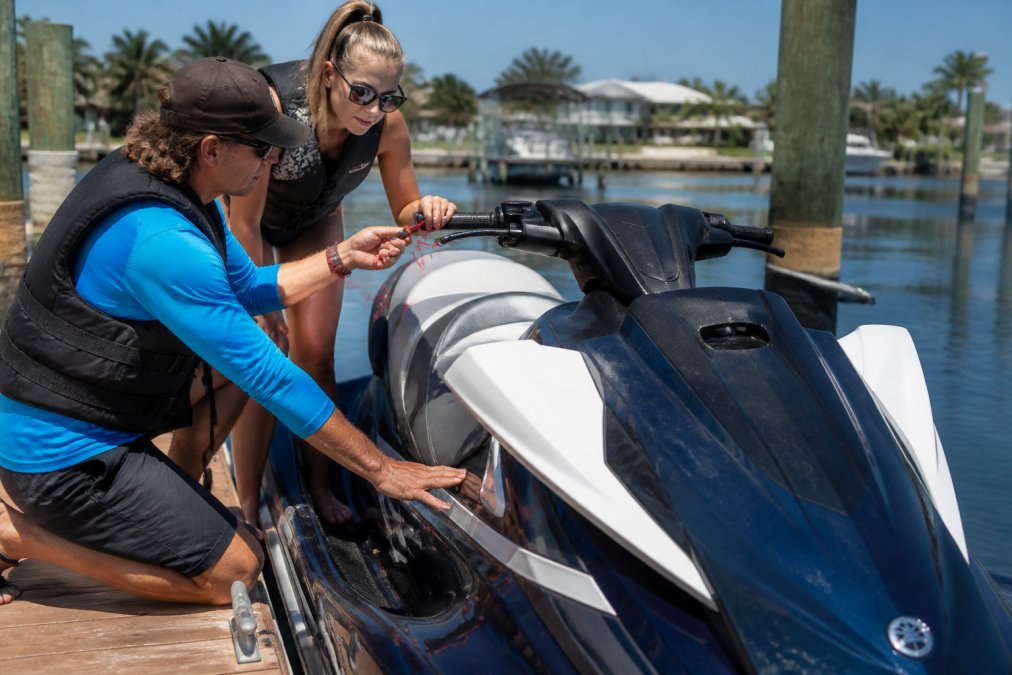
This checklist becomes routine after a few rides. Your instructor will walk you through it during your safe jet ski lessons for beginners.
What to Bring and How to Prepare for Your First Lesson
Preparation before your lesson makes the experience better. You'll be more comfortable, more confident, and able to focus on learning.
Bring your ID and proof of boating certification if required. Check your local regulations and bring documentation if needed. Bring cash or a card for any rental fees. Bring plenty of water and sunscreen. Bring a towel and dry clothes.
Arrive early. Arriving 15-20 minutes early gives you time to ask questions and settle your nerves. Ask questions before you start. A good instructor wants you confident and informed. Eat a light meal before your lesson, but not immediately before. Wear minimal jewelry and secure your phone and wallet. Communicate any physical limitations or concerns to your instructor.
Safe jet ski lessons for beginners succeed when you arrive prepared, ask questions, and stay focused on learning.
Your first jet ski lesson is the gateway to a lifetime of water adventures. The skills you learn, the confidence you build, and the safety habits you develop in those first few hours determine whether you become a cautious, competent operator.
Little Philly Sea Adventures prioritizes your safety and learning from the moment you arrive. Our instructors understand that beginners need clear instruction, hands-on practice, and the confidence that comes from knowing you're in capable hands. Book your safe jet ski lessons for beginners today, and discover why the Gulf Coast is the perfect place to learn.
Frequently Asked Questions
Q: Are jet skis safe for beginners?
A: Jet skis are safe for beginners when you receive proper instruction, wear required safety equipment, and follow boating regulations. Most accidents happen due to lack of training or failure to wear a life jacket. Taking a certified lesson from a qualified instructor dramatically reduces risk. Instructors teach you how to handle throttle control, steering mechanics, and emergency procedures before you operate the personal watercraft independently.
Q: Do I need a license to operate a jet ski?
A: License requirements vary by state. Some states require a boating safety certificate or PWC-specific endorsement, while others have age-based restrictions. Federal regulations and Coast Guard standards apply to all waterways. Check your state's boating authority for specific requirements before your lesson.
Q: How long is a typical jet ski lesson for beginners?
A: Most beginner jet ski lessons run 1 to 2 hours. The first 30 minutes typically covers safety briefing, equipment overview, and on-land instruction about steering and throttle control. The remaining time is spent on water with the instructor supervising your practice. Some providers offer longer immersive lessons or multi-day courses for those wanting deeper skill development and more on-water practice.
Q: What should I do for my first time on a jet ski?
A: Start by attending a certified lesson with an instructor who will teach you the fundamentals. Wear all required safety gear, including a Coast Guard-approved life jacket and lanyard connected to the kill switch. Listen carefully during the safety briefing about right-of-way rules, no-wake zones, and collision avoidance. Begin in calm water, focus on smooth throttle control, and practice basic maneuvers like turning and stopping before venturing into more challenging conditions.
This article was written using GrandRanker
Frequently Asked Questions
Q: Are jet skis safe for beginners?
A: Jet skis are safe for beginners when you receive proper instruction, wear required safety equipment, and follow boating regulations. Most accidents happen due to lack of training or failure to wear a life jacket. Taking a certified lesson from a qualified instructor dramatically reduces risk. Instructors teach you how to handle throttle control, steering mechanics, and emergency procedures before you operate the personal watercraft independently.
Q: Do I need a license to operate a jet ski?
A: License requirements vary by state. Some states require a boating safety certificate or PWC-specific endorsement, while others have age-based restrictions. Federal regulations and Coast Guard standards apply to all waterways. Check your state's boating authority for specific requirements before your lesson.
Q: How long is a typical jet ski lesson for beginners?
A: Most beginner jet ski lessons run 1 to 2 hours. The first 30 minutes typically covers safety briefing, equipment overview, and on-land instruction about steering and throttle control. The remaining time is spent on water with the instructor supervising your practice. Some providers offer longer immersive lessons or multi-day courses for those wanting deeper skill development and more on-water practice.
Q: What should I do for my first time on a jet ski?
A: Start by attending a certified lesson with an instructor who will teach you the fundamentals. Wear all required safety gear, including a Coast Guard-approved life jacket and lanyard connected to the kill switch. Listen carefully during the safety briefing about right-of-way rules, no-wake zones, and collision avoidance. Begin in calm water, focus on smooth throttle control, and practice basic maneuvers like turning and stopping before venturing into more challenging conditions.