 how-to
What Is Included in Boat Rental? Full Guide
Table of Contents
- What Is Included in a Boat Rental: The Standard Package
- What Is NOT Included: Hidden Costs Breakdown
- Boat Rental Fuel Policies Explained
- Boating License Requirements for Rentals
- What to Bring on a Boat Rental: Packing List
- Half-Day vs Full-Day Boat Rental: Which Fits?
- The Rental Process: From Paperwork to Post-Rental Inspection
- Conclusion: Book Your Boat Rental with Confidence
- Frequently Asked Questions
Last Updated: September 5, 2026
What Is Included in a Boat Rental: The Standard Package
A standard boat rental package includes the vessel, required Coast Guard safety equipment, a safety briefing, and basic operational instruction. At Little Philly Sea Adventures, we focus on a "no surprises" policy so you know exactly what is on board before you cast off.
Required Safety Equipment on Board
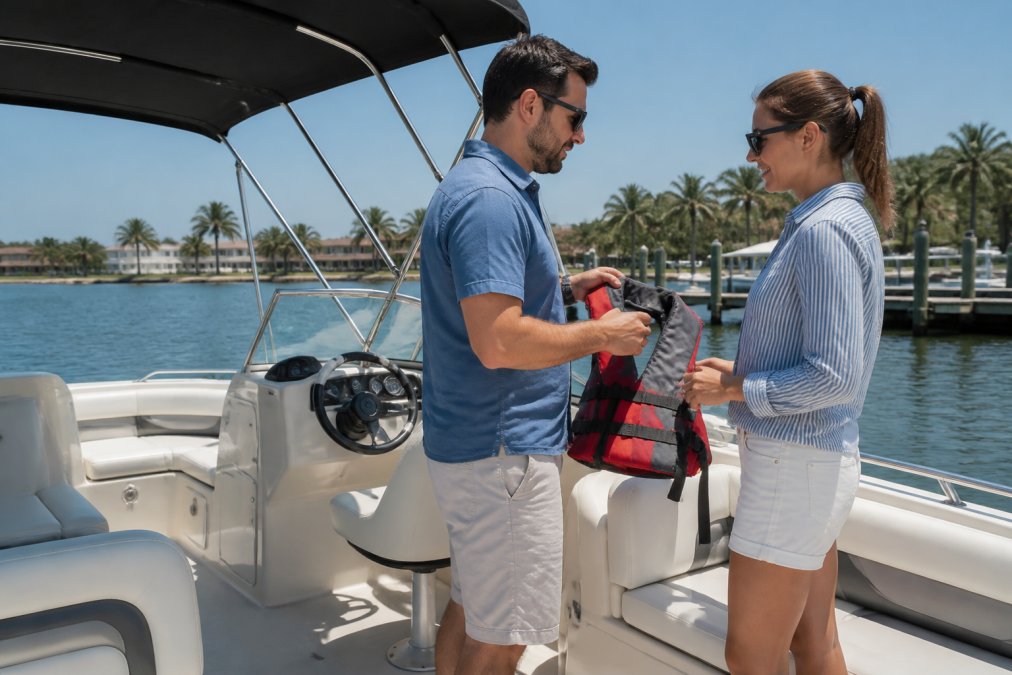
Federal law requires specific safety gear on every recreational vessel. Life jackets, also called personal flotation devices, must be available and properly sized for every passenger on board. The U.S. Coast Guard safety equipment requirements mandate that children under a certain age wear their life jackets at all times while the vessel is underway.
Beyond life jackets, the standard package typically includes a throwable flotation device, a fire extinguisher, sound-producing devices, visual distress signals, navigation lights, and an anchor with sufficient line, all stored in accessible, labeled locations.
Standard Boat Features and Amenities
Most rental pontoons and deck boats include a bimini top, a cooler, a swim ladder, a basic GPS unit or chart plotter, a marine radio, and a fuel gauge you should verify reads full at departure.
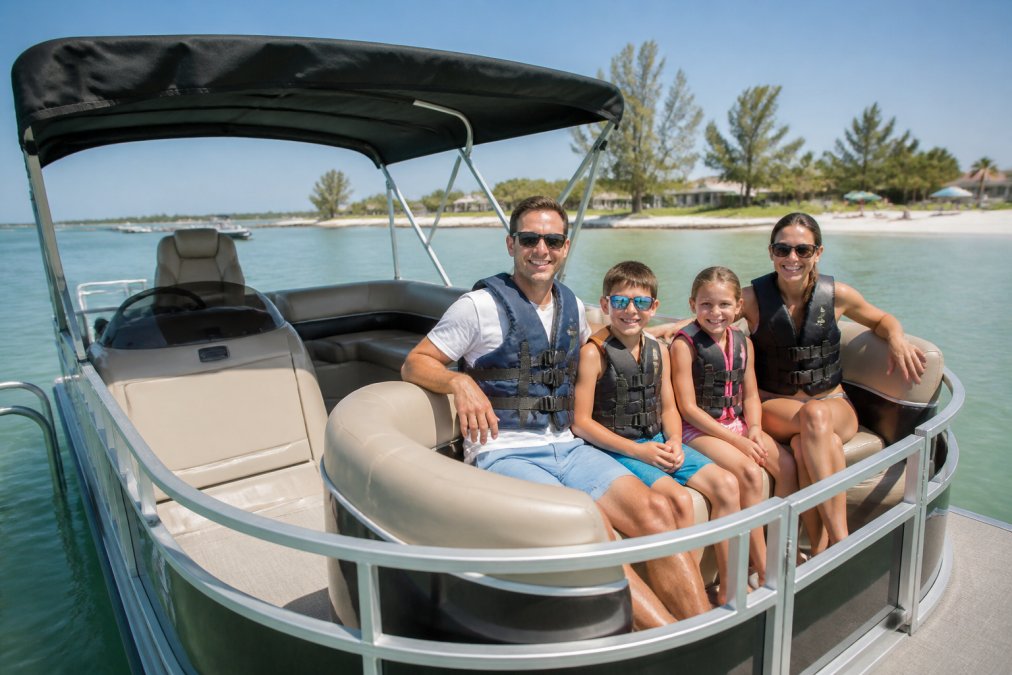
Stereo systems, freshwater showers, and boarding platforms are common on newer vessels. The operator should walk you through every feature during the safety briefing, including the anchor, engine trim, and emergency radio use.
What Is NOT Included: Hidden Costs Breakdown
Many renters focus on the base rate and overlook additional charges. Fuel, taxes, and optional insurance are the most common line items that catch first-timers off guard.
Fuel, Taxes, and Administrative Fees
Fuel policies vary widely, so ask before booking. Some charge a flat fee for a full tank, while others bill based on hours or a gauge reading. Taxes and service fees are typically added, so confirm whether the advertised price includes them.
Administrative fees, sometimes called booking or dock fees, can appear on top of the base rate. A transparent operator discloses all charges upfront.
Security Deposits and Insurance Options
Most rental companies hold a security deposit against damage, authorized at pickup and released after the post-rental inspection. The deposit covers propeller damage, hull scratches, or lost equipment beyond normal wear.
Liability insurance and a damage waiver are often available as optional add-ons. A damage waiver typically limits your financial responsibility for accidental damage, while liability coverage protects you if you cause injury to others or damage their property. Review the boating insurance guidance from the National Association of Insurance Commissioners to understand what your personal policy might cover and where the rental operator's coverage begins.
Boat Rental Fuel Policies Explained
Fuel is the most variable line item in a boat rental, swinging your final bill by $50 to $150 or more on a full-day trip. Most operators use one of three systems, each with different financial logic.
Full-to-Full: The Transparent Standard
Under a full-to-full policy, you receive the boat with a full tank and return it full, paying only for the fuel you burn. The operator records the gauge and engine hours at departure, and you stop at a designated fuel dock on the way back.
The catch is finding a fuel dock and budgeting time for the stop. On popular waterways like the Intracoastal Waterway or around Anna Maria Island, fuel docks can have long lines on summer weekends. Factor 20 to 30 minutes into your return trip.
What to ask before booking:
- Is the fuel dock staffed or self-serve?
- Do they accept credit cards or cash only?
- What is the current price per gallon compared to the local marina average?
Prepaid Tank: Convenience With a Premium
A prepaid tank policy charges a flat fee at booking, covering a full tank regardless of use. It is easy to budget for but almost always costs more if you cruise conservatively or stay close to the dock.
A typical pontoon holds 30 to 40 gallons. At $4.50 per gallon, a full tank costs $135 to $180. If you anchor at a nearby sandbar most of the day, you might burn only 8 to 12 gallons.
Prepaid makes sense only if you plan heavy cruising, long distances, or water toys. For a typical family day of swimming and relaxing, it is usually the most expensive option.
Pay-for-What-You-Use: The Receipt Chase
Some operators, especially those with their own fuel docks, bill you based on the gauge reading at return, deducting the estimate from your deposit or charging your card. This requires trusting the operator's gauge calibration.
A less common variant requires refueling at a specific station and bringing back a receipt. Ask whether the operator accepts a receipt from any marina or only a preferred partner.
How to Estimate Your Fuel Cost Before You Book
A typical pontoon with a 90-horsepower outboard burns 3 to 5 gallons per hour at cruising speed and 1 to 2 at no-wake speeds. A deck boat with a 150-horsepower engine burns 6 to 9 gallons per hour at cruise. Multiply your planned engine hours by the burn rate and local fuel price.
| Policy Type | Best For | Watch Out For |
|---|---|---|
| Full-to-full | Budget-conscious renters who plan moderate use | Finding a fuel dock on the way back |
| Prepaid tank | Renters who plan heavy cruising or water sports | Paying for fuel you do not use |
| Pay-for-what-you-use | Renters who trust the operator's gauge | Receipt requirements and gauge accuracy |
The Hidden Fuel Fee: Generator and House Battery Usage
Many modern pontoons have a generator or house battery bank powering the stereo, refrigerator, and lighting. Some operators charge a separate "amenity fee" or include generator hours in the fuel bill. Confirm whether the quoted policy covers house battery usage or if there is an additional hourly charge while anchored.
Boating License Requirements for Rentals
Most states do not require a formal license to rent a boat for recreational use, but many require a boater education card for operators born after a certain date. For example, Florida requires anyone born on or after January 1, 1988, to complete a boating safety course and carry a boater education ID card when operating a vessel. The Florida Fish and Wildlife Conservation Commission boating safety requirements provide the definitive rules for operators in state waters.
Operators will ask for a valid government-issued ID and may require proof of boater education. If you lack the card, many offer a brief onboard orientation or a temporary online course. Verify requirements when booking.
What to Bring on a Boat Rental: Packing List
Your packing list should cover sun protection, hydration, and personal items. Reef-safe sunscreen, polarized sunglasses, and a wide-brimmed hat are essential. Bring more drinking water than you think you need, plus snacks and lunch in a cooler.
Dry bags protect your phone, wallet, and keys. A light jacket or towel helps on the return trip. Take motion sickness medication before departure if prone. Leave valuable jewelry at home and secure your phone in a waterproof case with a lanyard.
| Item | Purpose | Pro Tip |
|---|---|---|
| Reef-safe sunscreen | Skin protection | Reapply every 2 hours |
| Dry bag | Protect electronics | Pack a spare for trash |
| Drinking water | Hydration | Freeze bottles overnight |
| Light jacket | Wind protection | Useful for return trip |
| Polarized sunglasses | Glare reduction | Helps spot sandbars |
Half-Day vs Full-Day Boat Rental: Which Fits?
The half-day versus full-day decision is about cost per hour, itinerary feasibility, and crew stamina. Most operators define a half-day as 4 hours and a full day as 8, but a full day often costs only 40 to 60 percent more.
Book your unforgettable experience today! →
The Real Cost-Per-Hour Math
A typical pontoon might run $350 for a half-day and $550 for a full day, $87.50 per hour versus $68.75. The full day delivers 33 percent more hours for 57 percent more money, making it the better value per hour for groups that will use the time.
However, a half-day keeps your total financial exposure lower, including fuel, waiver fees, and the deposit hold. If you are a first-timer or have young children, the half-day limits risk.
What You Can Actually Do in 4 Hours
A 4-hour window sounds generous until you account for logistics. You lose 30 minutes at departure for the briefing and 20 to 30 minutes at return for fuel and inspection, leaving roughly 3 hours of on-water time.
With 3 hours, you can cruise 20 to 30 minutes to a nearby sandbar, anchor and swim for 1.5 to 2 hours, and cruise back with a buffer for weather or no-wake zones.
You cannot visit multiple destinations, fish several spots, or make a long run to a restaurant and back. A half-day works best with one primary destination in mind.
What a Full Day Unlocks
An 8-hour rental, after 45 to 60 minutes of logistics, gives you roughly 7 hours on the water. A common full-day plan near Anna Maria Island might include a morning cruise to Egmont Key, a midday sandbar stop, and an afternoon shoreline run to spot dolphins.
A full day also makes sense for fishing. You can run 30 to 45 minutes to a reef, fish for 2 to 3 hours, relocate if the bite is slow, and still have time for a swim stop. Half-day fishing trips often feel rushed because bite windows do not align with a fixed 4-hour clock.
The Hidden Cost of a Full Day: Fatigue and Sun Exposure
Full-day rentals are not universally better. By hour six, sun exposure, heat, and motion take a toll, especially on children and older adults. Fatigue is a genuine safety issue.
Families with children under 10 often do great for the first 4 hours and then hit a wall. If your group is prone to fatigue, consider two half-day rentals on separate days.
A Decision Framework Based on Your Trip Type
| Trip Type | Recommended Duration | Why |
|---|---|---|
| First-time renters | Half-day | Lower financial exposure, shorter learning curve |
| Families with kids under 10 | Half-day | Attention span and sun tolerance limits |
| Couples or small groups | Full-day | More time to relax, better cost per hour |
| Fishing trips | Full-day | Need time to reach spots and relocate |
| Multi-stop sightseeing | Full-day | Only way to visit 2-3 destinations |
| Sunset cruise | Half-day (evening) | 4 hours covers the golden hour and return |
The Weather Wildcard
Weather most often disrupts the half-day versus full-day calculus. A morning half-day typically has more predictable weather than an afternoon rental, when thunderstorms are common in Florida summers. A full day gives flexibility but commits you to the peak storm window.
Ask how the operator handles weather interruptions. Some offer partial refunds or rescheduling for lightning or small craft advisories; others hold you to the full fee. This policy should factor into your decision.
The 6-Hour Middle Ground
Some operators offer a 6-hour rental between the standard half-day and full-day options, often the sweet spot for families wanting more than a quick outing without the fatigue of a full 8 hours. Ask whether this intermediate duration is available.
The Rental Process: From Paperwork to Post-Rental Inspection
The rental process follows a predictable sequence: reservation, check-in, safety briefing, vessel orientation, on-water time, and return inspection. Plan to arrive 30 minutes before departure.
Documentation and Identification Requirements
Bring a valid government-issued photo ID for the primary renter and any additional operators. Most operators require the primary renter to be at least 25, though some allow younger renters with an additional deposit. Have your credit card ready for the deposit hold.
The rental agreement is a binding contract, so read it thoroughly. Confirm the duration, fuel policy, included equipment, and financial responsibility for damage.
Weather Policies and Safety Briefing
Weather can change quickly, and reputable operators monitor conditions closely. Most allow rescheduling or a full refund if they cancel due to lightning, high winds, or small craft advisories. If conditions deteriorate on the water, head back.
The safety briefing covers emergency procedures, navigation rules, and safety equipment operation. Pay attention to no-wake zones, manatee protection areas, and speed limits. The operator should show you how to use the GPS, radio, and anchor.
Post-Rental Inspection Checklist
When you return, the operator will inspect the vessel for damage and verify the fuel level. Photograph any pre-existing damage before departure to avoid disputes. Check that all personal belongings are removed.
The operator will check the propeller, inspect the hull, and confirm all safety equipment is accounted for. If everything matches the pre-rental condition, your deposit hold is released.
Conclusion: Book Your Boat Rental with Confidence
The difference between a great rental day and a frustrating one often comes down to what you knew before booking. Understanding standard equipment, fuel policies, licensing rules, and hidden fees puts you in control.
At Little Philly Sea Adventures, our "no surprises" policy means you get a clear breakdown of costs, proper safety equipment, and a thorough orientation before you leave the dock. We serve Holmes Beach, Anna Maria Island, and the surrounding Gulf Coast waters with a focus on family-friendly experiences. Book your unforgettable experience today and spend your time on the water, not decoding fine print.
Frequently Asked Questions
Do boat rentals include fuel in the price?
Most rental companies do not include the cost of fuel in the base rental rate. You will typically pay for the fuel you use, either by refilling the tank before returning the boat or through a refueling charge calculated after your trip. Some operators offer a full-tank policy where you pay a set rate upfront. Always confirm the fuel policy with the rental company before booking so you know the real total.
What safety equipment is required on a rental boat?
Rental boats must carry U.S. Coast Guard safety equipment, including a personal flotation device or life jacket for every person on board. You will also find a throwable flotation device, a fire extinguisher, and a sound-producing device like a horn or whistle. The rental company should provide all of this. Ask for a safety briefing before departure so you know where everything is stored.
Do I need a boating license to rent a boat in the Gulf Coast area?
In Florida, anyone born on or after January 1, 1988, must carry a valid Boater Education Card to operate a vessel. If you do not have one, many rental companies will provide a temporary license or a quick onboard safety orientation that satisfies the legal requirement for the duration of your rental. Confirm what the operator requires when you make your reservation.
Are life jackets provided with boat rentals?
Yes, life jackets are always provided with a boat rental. The operator must supply a U.S. Coast Guard-approved personal flotation device in the correct size for every passenger. Children under a certain age have specific requirements, so mention younger passengers when booking. If you have a preferred style, you are welcome to bring your own, but the rental boat will have the required gear.
This article was written using GrandRanker